
Industries · Multifamily
Roofing for apartments & multifamily
Occupied units, parking to protect, tenants to notify, and owners who want it handled. Multifamily roofing is as much logistics as craftsmanship. We run both.
Licensed for commercial roofing in Mississippi
Southeast Roofing LLC holds Mississippi State Board of Contractors Commercial Certificate of Responsibility 27720-SC, alongside residential license R22245. Mississippi requires a commercial license for commercial jobs over $50,000. Below that, local city or county requirements may still apply.
Roofing with tenants underneath
Every multifamily project happens over people's homes. That means notice letters before we start, parking and walkway protection plans, debris control that keeps kids and pets safe, and crews who understand they're working over someone's nursery at nap time. Property managers judge a roofer by how few tenant calls a project generates: that's the metric we work to.
For owners and management companies, the paperwork is the product: itemized proposals that survive an asset manager's review, per-building condition reports across a portfolio, and storm documentation that supports claims across multiple structures at once.
What multifamily projects demand
Tenant communication
Notices, schedules, and a clean site: fewer resident complaints, happier ownership.
Building-by-building phasing
Communities reroof in sequence, prioritized by condition, spread across budgets.
Storm claims at scale
One hail event can touch a dozen buildings, documentation has to keep them straight.
Owner-grade reporting
Condition reports and proposals formatted to forward straight up the chain.
Assessing a property building by building
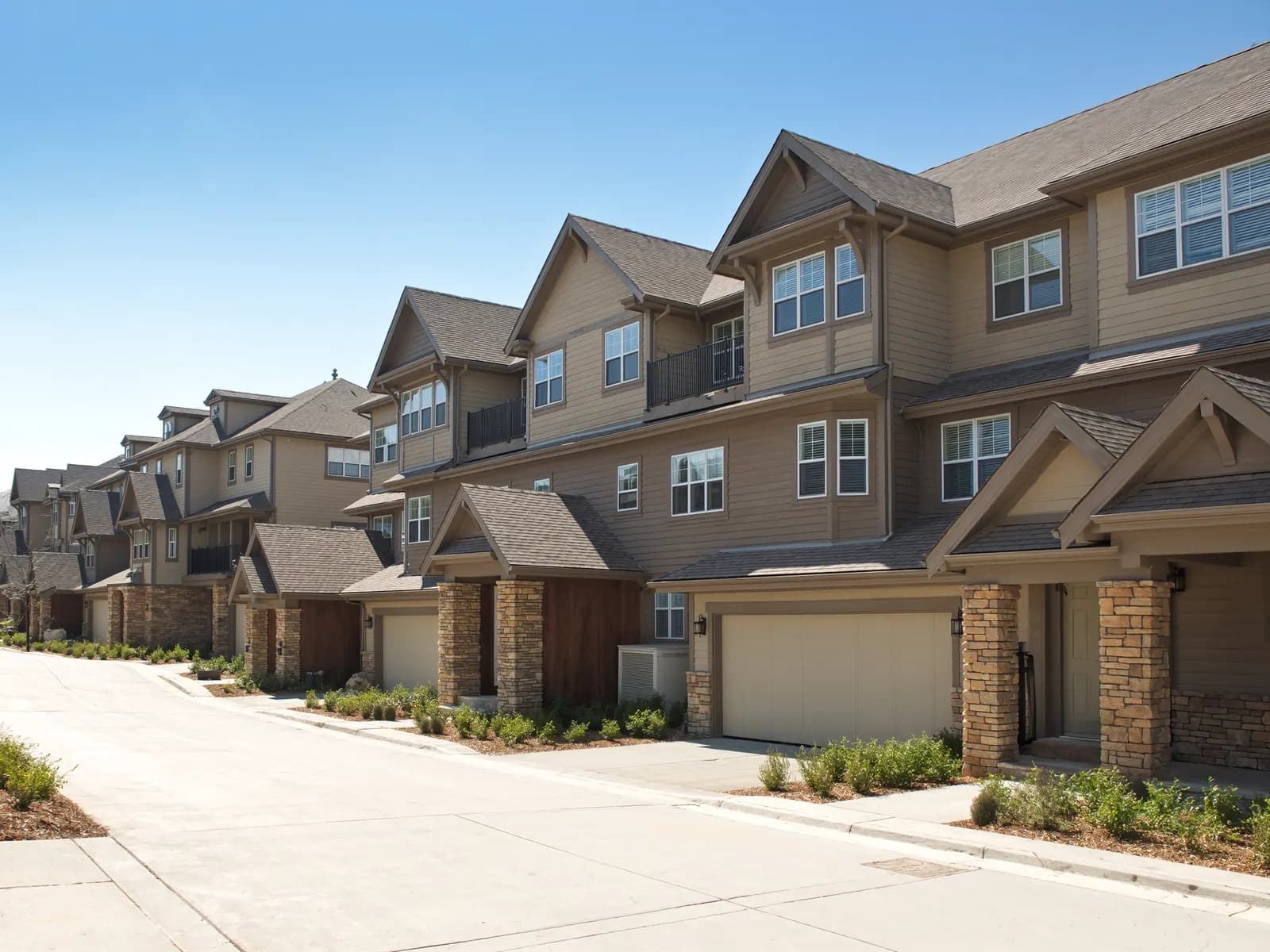
Most apartment communities were built from a handful of repeated designs, so the roofs repeat too: the same hips, the same valleys, the same breezeway transitions on every building. That repetition is useful: once we've documented one building type thoroughly, we know exactly where to look on its siblings. But identical designs don't mean identical condition. Tree cover, sun exposure, storm paths, and past repair quality vary across a property, so every building still gets its own inspection and its own condition record.
A typical community also mixes systems: architectural shingles on residential buildings, a low-slope membrane on the clubhouse or office, metal accents over entries and mail kiosks, and the assessment covers all of it, ranked by condition so ownership can act on the whole property or start where it matters most.
| What the assessment finds | Recommended starting action |
|---|---|
| Isolated leaks on otherwise sound roofs | Targeted repairs now, plus a maintenance program to catch the next ones early |
| Early, even wear across identical buildings | Maintenance and reserve planning toward a phased replacement in coming budget years |
| One or two buildings clearly worse than the rest | Worst-first replacement, with the remaining buildings documented and monitored |
| Storm damage across multiple buildings | Per-building documentation and an insurance claim evaluation before any spending decisions |
| Roofs at end of service life property-wide | A phased full-replacement plan sequenced across budget cycles |
Tenant notice, unit entry, and leak reports
Residents deserve to know what's coming, so notice goes out before mobilization: which buildings, which dates, what to expect for noise, and who to call. We supply notice templates and building-by-building schedules your office can distribute, and we keep the schedule honest. A resident told Tuesday should hear hammers Tuesday. Balcony items, patio furniture, and anything fragile on top-floor shelves get flagged in the notice, because tear-off vibration overhead is real.
During the project, interior leak reports route through a single point of contact so nothing gets lost between the property office and our crew. Unit entry is rare on roofing work, and when it's genuinely needed: checking a reported ceiling stain, for instance. It's coordinated through management under the lease's notice rules, never ad hoc. We won't promise a disruption-free project, because that promise can't be kept honestly; we promise disruption that's scheduled, communicated, and short.
Parking, staging, dumpsters, and daily cleanup
Parking is the scarcest resource on most properties, so the logistics plan treats it that way: only the spaces beside the active building are blocked, only for that building's work days, with notices and signage in advance so residents can move vehicles the night before. Dumpster and material staging locations are agreed with management up front, visible enough to work from, out of the way of traffic flow, and never blocking dumpster access residents need.
Cleanup is daily, not end-of-project. Debris netting and catch systems protect entries and walkways during tear-off, landscaping near the building gets covered, and every evening ends with a ground sweep and magnetic nail rollers over parking areas, sidewalks, and pet areas. Kids and pets live on this site. The ground crew's job is making sure the only evidence of roofing is the new roof.
Repeated designs, phasing, and color consistency
Repetition is the efficiency engine of multifamily roofing: after the first building of a given design, crews know every detail cut, every flashing length, and every sequence, so following buildings move faster and cleaner. Phasing building by building keeps each resident's disruption to a few days and lets the property spread the investment across one season or several budget years.
Phasing has one trap worth planning for: consistency. A shingle color installed this year may be discontinued or lot-shifted three years from now, so a phased plan names the manufacturer, product line, and color up front, and we document it in the property's records for every future phase. Where an exact match is no longer available down the road, we say so plainly and show options. A mismatched half-property is the outcome nobody wants.
Insurance claims, reserves, and records that outlast managers
One hailstorm can touch a dozen buildings, and the claim only works if the documentation keeps them straight. We photograph and report each structure separately: damage tied to building numbers, elevations, and the storm date, so the carrier, the adjuster, and ownership all see a clean per-building picture, and we can walk the adjuster across the whole property in one coordinated visit.
Outside of storms, the same records serve capital planning. Per-building condition reports give owners and HOA boards a defensible basis for reserve contributions, and warranty registrations, product records, and closeout photos live in a package the property keeps, so when the manager changes in four years, the roof history doesn't leave with them.
Our approach
How we serve multifamily properties
Community-wide assessment
Every building documented and ranked. A capital plan, not a one-off quote.
Logistics plan first
Parking, access, debris, and tenant notices mapped before the first shingle moves.
Phased, rapid execution
Building-at-a-time sequencing keeps disruption short and predictable for residents.
Portfolio documentation
Per-building closeout reports and warranty records your asset files can hold onto.
Materials & options
Systems we recommend for multifamily
Architectural shingles
The pitched-roof standard for garden-style communities: economical at scale.
TPO membrane
Flat-roof buildings and clubhouses, with reflectivity that helps tenant utility bills.
Coating restorations
Extend flat sections between capital cycles without disturbing residents.
What we evaluate before quoting a multifamily property
Community-wide numbers come from building-level facts. These are the variables that shape a multifamily proposal.
Building count and phasing plan
One mobilization differs from five spread across budget years, sequencing is part of the price.
Mix of roof systems
Steep shingle buildings, low-slope clubhouse sections, and metal accents each carry their own scope.
Existing layers and tear-off
A second shingle layer or saturated low-slope assembly changes disposal volume and labor.
Access and parking logistics
Tight drives, carports, limited staging room, and occupied parking all shape crew productivity.
Occupied-building protections
Debris catch systems, walkway protection, and daily magnetic sweeps are scope, not extras.
Storm damage versus wear
Documented storm damage may route through insurance; aging roofs are a capital decision, often a property has both.
Color and product continuity
Matching earlier phases, or planning products that future phases can still buy, affects selection.
FAQ
Roofing for Apartments & Multifamily questions, answered
How do you handle tenant notifications?
Can you reroof our whole community or just problem buildings?
A storm hit several of our buildings. How do claims work at that scale?
What happens to tenants' satellite dishes?
Do residents have to move their cars?
If we phase over several years, will the buildings still match?
Who handles resident leak calls during the project?
Service area
Where we provide roofing for apartments & multifamily
Based in Hattiesburg, on commercial buildings across the Pine Belt, the Gulf Coast and the corridor between them.
We work well beyond these eight, on a radius of about two hours from Hattiesburg. See every town we serve, or tell us where the building is.
Let's talk about your roof
A consultation, not a sales pitch: we assess your building, your operations, and your budget cycle, then propose the system that actually fits.