
Commercial roofing
Commercial Roof Coatings & Restoration in Hattiesburg, MS
Restoration: the replacement you might not need
If the roof under your problems is still fundamentally sound, a fluid-applied coating system can seal it, cool it, and extend its life, with no tear-off and no operational shutdown. The key word is 'if,' and testing answers it.
Licensed for commercial roofing in Mississippi
Southeast Roofing LLC holds Mississippi State Board of Contractors Commercial Certificate of Responsibility 27720-SC, alongside residential license R22245. Mississippi requires a commercial license for commercial jobs over $50,000. Below that, local city or county requirements may still apply.
The honest math of coating vs. replacing
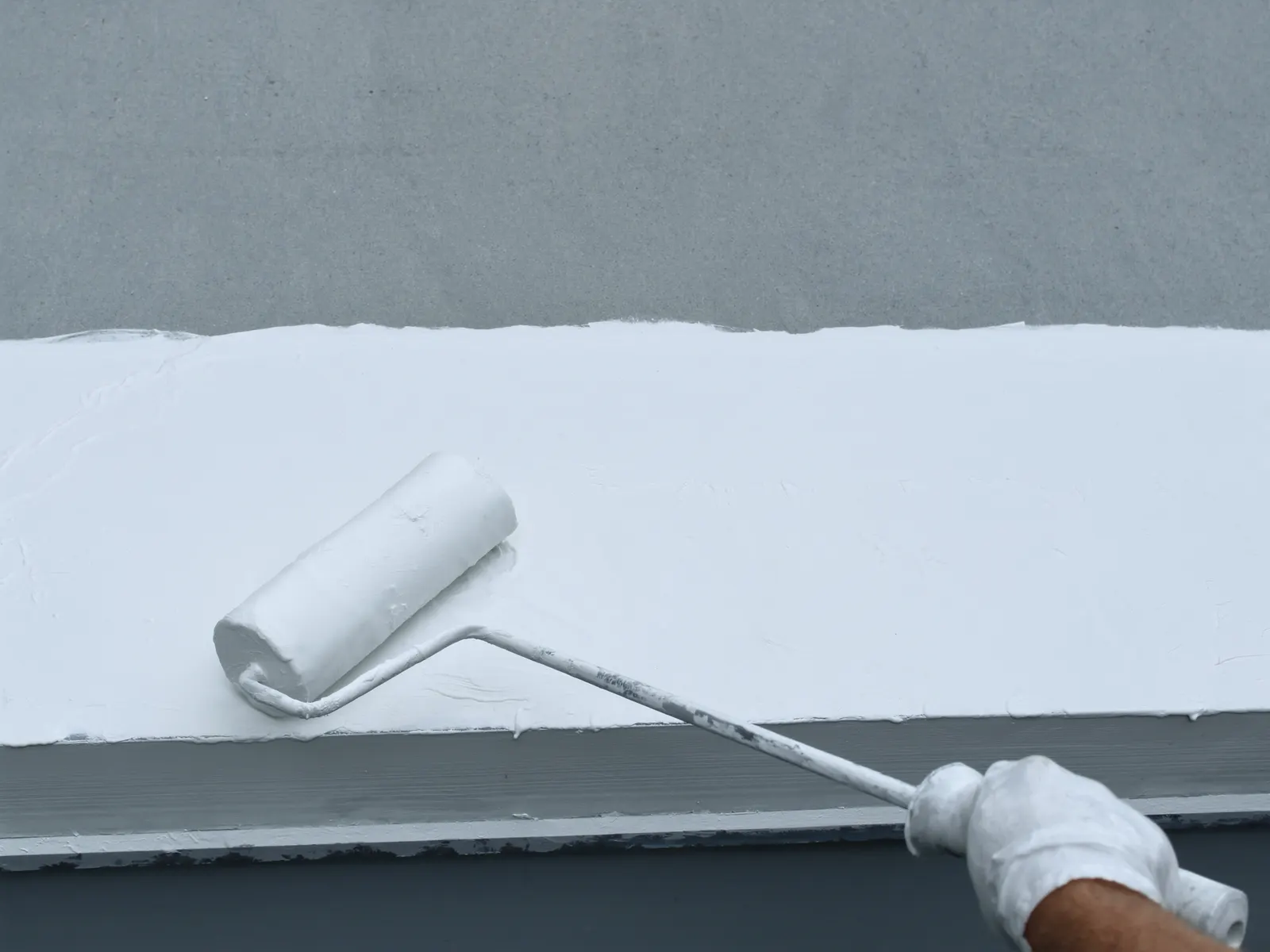
Plenty of 'failed' commercial roofs aren't failed at all. The membrane is tired at the seams and details while the field is sound. Restoration attacks exactly that: repair the failure points, then seal the whole roof under a seamless fluid-applied membrane. When the roof qualifies, the investment lands well below replacement, the work happens over your operating business, and the bright white finish cuts roof surface temperatures from day one.
The honesty requirement is the assessment. A coating is not an automatic substitute for replacement, coating a roof with wet insulation or widespread membrane failure wastes your money. It takes moisture scanning and core checks first, and when the verdict is replacement, we'll show you why. When restoration is viable, it's one of the best values in commercial roofing.
Signs your roof is a restoration candidate
Leaks at seams and details
Failure concentrated at flashings and seams, not through the field membrane, restores well.
Aging but intact
A membrane in its later years that's still dry underneath is the ideal candidate.
Capital budget pressure
On a qualifying roof, restoration typically requires far less capital than replacement, and no tear-off.
Heat-soaked building
Reflective coatings drop roof surface temperatures dramatically in a Mississippi summer.
First question: does this roof qualify?
Coatings restore roofs; they don't resurrect them. The existing membrane must be structurally sound, adequately attached, and chemically compatible with the coating going over it. A coating cannot fix a deteriorated deck, correct inadequate slope, or bridge a membrane that's failing across its field. Those are replacement conversations, and pretending otherwise just delays them at your expense.
Qualification is a physical process, not a sales judgment: we evaluate the substrate, test adhesion where the manufacturer requires it, and investigate moisture before a gallon is ordered. Roofs that pass get a restoration proposal; roofs that don't get a straight explanation and the replacement comparison in the same conversation.
Why moisture testing comes before everything
Water trapped in the insulation is restoration's disqualifier-in-chief. Coating over saturated insulation repairs nothing. It seals wet material into the assembly, where it keeps degrading the roof from below while the surface looks new. Finding it first is non-negotiable.
We look for trapped moisture with the standard tools: core samples that physically reveal the assembly's condition, and moisture scanning, infrared surveys that spot the thermal signature of wet insulation, or electrical capacitance scanning that reads moisture through the membrane. Isolated wet areas can be cut out and replaced before coating; widespread saturation ends the restoration conversation honestly.
Silicone, acrylic, or urethane: matching chemistry to the roof
The three major coating families solve different problems, and fabric-reinforced restoration systems add strength at seams and details where applicable. Silicone commonly performs where intermittent ponding is a concern (a product-specific claim. We verify it against the actual product), but it collects dirt and is difficult to recoat with anything but more silicone. Acrylics are reflective, water-based, and economical, but they need proper drying conditions and a roof with positive drainage. Urethanes bring strong abrasion and traffic resistance, often used where wear is the enemy.
| Silicone | Acrylic | Urethane | |
|---|---|---|---|
| Standout strength | Commonly performs where intermittent ponding is a concern (product-specific) | Reflectivity and value; water-based application | Abrasion and traffic resistance |
| Main limitations | Attracts dirt; hard to recoat with non-silicone products | Needs drying conditions and positive drainage | Often paired with other coatings; costlier as a full system |
| Common role | Slow-draining roofs and weathered membranes | Well-draining roofs chasing reflectivity | High-wear zones and base layers under other coatings |
Preparation is most of the system
A coating is only as good as what it sticks to, so the prep list is long and unglamorous: cleaning the roof to the manufacturer's standard, treating rust on metal roofs, replacing backed-out or failed fasteners, reinforcing seams, detailing every penetration, and running adhesion tests where the spec requires them. On many projects, preparation consumes more labor than the coating application itself.
That's also where corners get cut by low bidders. A coating sprayed over a dirty or unrepaired roof will peel, blister, or leak on the same schedule as if nothing had been done. The product takes the blame, but the prep was the failure. Our proposals itemize the preparation scope so you can compare bids on what actually matters.
Wet-film, dry-film, and why the warranty cares
Coatings are applied wet and cure to a thinner dry layer, wet-film thickness and dry-film thickness are different numbers, and the warranty keys on the dry result. Manufacturers commonly tie warranty terms to the product, the substrate, the preparation, and the installed dry-film thickness: more cured material generally supports longer coverage, subject to the written warranty terms.
This is also why there is no universal gallons-per-square answer, coverage depends on the product, the roof's texture and porosity, and the thickness the specified warranty requires. We measure film thickness during application and document it, because that record is what stands behind the system years later.
Where restoration fits between repair and replacement
Think of it as a spectrum. Isolated problems on a healthy roof call for repairs. Widespread detail-and-seam fatigue on a dry, sound roof is restoration's sweet spot, the whole surface gets renewed without tear-off, and many systems can be recoated later to extend the cycle. Saturated insulation, deck problems, or field-wide membrane failure mean replacement, and no coating changes that.
One operational note: a restored roof is still a membrane roof. Walk pads may still be required on service routes, drainage still needs to work, and a maintenance cadence still protects the investment: the coating renews the surface; it doesn't repeal the physics.
Our approach
How restoration works
Moisture survey first
Core samples and moisture scanning verify the roof qualifies: no coating over wet insulation, ever.
Repair the failure points
Seams, flashings, penetrations, and any saturated sections fixed before a drop of coating goes down.
Fluid-applied system
Silicone, acrylic, or urethane, chosen for your roof's ponding and exposure profile, applied to the specified thickness.
Documented for the future
Thickness readings and photos on file. Many restorations can be recoated later, extending life again.
What affects the cost of a coating restoration?
Restoration pricing follows the roof's condition more than its size. The real variables:
Existing roof type and condition
Metal, mod-bit, single-ply, and smooth BUR each need different prep and primers, and condition sets the repair scope.
Moisture findings
Wet insulation discovered by scanning or cores must be cut out and replaced before coating, or may disqualify the roof.
Preparation scope
Cleaning, rust treatment, fastener replacement, and seam reinforcement often outweigh the coating itself in labor.
Coating chemistry and product
Silicone, acrylic, or urethane, selected for the roof's drainage and exposure, at different material costs.
Specified dry-film thickness
The warranty term drives how much cured material must be installed, which drives material quantity.
Fabric reinforcement
Reinforced systems at seams, transitions, or across the field add material and labor where specified.
Detail density and access
Penetrations, curbs, and walls are brush-and-fabric work; roof height and staging shape the labor plan.
FAQ
Roof Coatings & Restoration questions, answered
Is coating really cheaper than replacement?
Silicone or acrylic. What's the difference?
How long does a coating restoration last?
How much coating does our roof need?
Can you coat a metal roof?
Will you coat a roof that shouldn't be coated?
Related services
You may also need
Industries we serve
Built for your kind of building
Every facility type has its own schedule, budget, and roof. We roof them all across South Mississippi.
Service area
Where we provide roof coatings & restoration
Based in Hattiesburg, on commercial buildings across the Pine Belt, the Gulf Coast and the corridor between them.
We work well beyond these eight, on a radius of about two hours from Hattiesburg. See every town we serve, or tell us where the building is.
Let's talk about your roof
A consultation, not a sales pitch: we assess your building, your operations, and your budget cycle, then propose the system that actually fits.