
Industries · Municipal
Roofing for municipal & public buildings
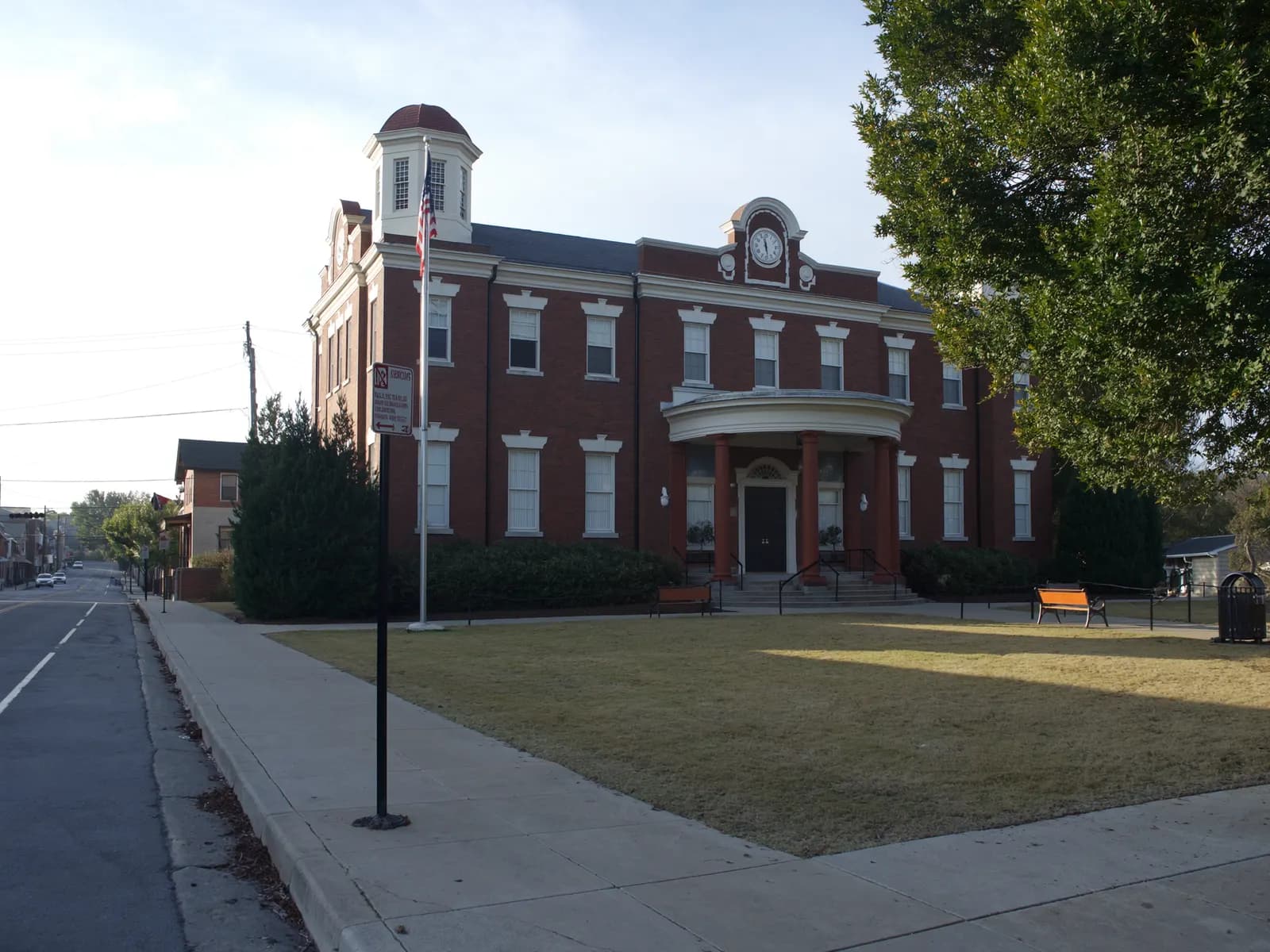
City halls, fire stations, libraries, public works, buildings the public owns and essential services depend on. Public projects demand public-grade documentation, and that's how we build ours.
Licensed for commercial roofing in Mississippi
Southeast Roofing LLC holds Mississippi State Board of Contractors Commercial Certificate of Responsibility 27720-SC, alongside residential license R22245. Mississippi requires a commercial license for commercial jobs over $50,000. Below that, local city or county requirements may still apply.
Accountability is the specification
Public projects answer to taxpayers, which changes how everything must be written: scopes itemized so committees can compare bids line by line, our Mississippi State Board of Contractors commercial certificate of responsibility #27720-SC and current insurance certificates attached, with bond requirements addressed project by project when the bid documents call for them, and records thorough enough to stand review years later. We build proposals for that standard because it's the standard public work deserves.
The buildings themselves serve missions that can't pause, a fire station roofs over trucks that must roll, a water office serves residents daily. Continuity planning for essential services sits at the center of how municipal projects get phased and scheduled.
What public projects require
Procurement discipline
Line-item scopes, comparable bids, and documentation that survives an audit.
Verified credentials
Current licensing and insurance documentation attached: bond requirements addressed when a project requires them.
Essential-service continuity
Fire, police, water, records: services that operate through the project.
Budget-year reality
Fiscal calendars and approval cycles built into the project timeline.
Proposals built for public procurement
Public purchasing runs on written documents, and a roofing proposal that can't slot into that process wastes everyone's time. Ours are structured for it: a defined written scope tied to documented conditions, alternates broken out separately so a board can weigh options without re-bidding, unit-based line items where bid documents request them, and the exhibits reviewers expect: license verification, insurance certificates, and manufacturer system information. Where a project's bid documents require payment or performance bonds, we address those requirements project by project, up front, before anyone spends evaluation time.
We also respect the clock that public approval runs on. Agenda deadlines, board and council meeting cycles, and public-notice requirements all take calendar days, so proposals arrive complete and early enough to make the meeting that matters, and questions from board members or purchasing staff get answered in writing, so the record is whole.
Continuity for services that can't pause
A fire station reroof happens over apparatus bays that must open in seconds, day and night, so bay doors, response routes, and rooftop communications equipment are mapped and protected, and no phase ever blocks a truck. Police facilities run around the clock with security requirements a jobsite has to respect. Libraries stay open to the public, city halls keep serving residents at the counter, and utility structures protect equipment that keeps water flowing. Each facility's mission defines its constraints, and the phasing plan is written against them.
The common thread is that the public keeps using the building while we work above it. That means sequencing loud work away from council meetings and court dates, coordinating with dispatch or shift supervisors where operations are sensitive, and keeping every emergency function reachable at every hour of the project.
Matching systems to public facilities
A municipality's building stock is as varied as its services, and the roof systems should match the building, its use, and the taxpayer's long-term interest, not a contractor's favorite product. These are the pairings we commonly evaluate across public portfolios.
| Facility type | Roof commonly found | Systems commonly considered |
|---|---|---|
| City hall & administration | Low-slope sections, sometimes steep-slope or architectural accents | TPO, modified bitumen, standing seam accents |
| Fire & police stations | Low-slope over apparatus bays and 24/7 operations | TPO or modified bitumen, phased to keep bays and dispatch running |
| Libraries | Mixed roof areas, often with skylights | Membrane systems with heavy emphasis on interior protection |
| Public works & maintenance buildings | Pre-engineered metal | Structural metal, panel replacement, retrofit options |
| Utility & pump structures | Varies widely by structure | Evaluated individually: small roofs protecting critical equipment |
Public access and site safety
Public buildings have one obligation private ones don't: the public is entitled to come in. So the site plan preserves that, main and accessible entrances stay open or get protected covered alternatives, barricaded exclusion zones keep pedestrians out from under overhead work, and drive-up functions like book drops, utility payment windows, and records counters keep operating. Public parking is only restricted where work genuinely requires it, with signage in advance.
Housekeeping is part of public safety too: daily debris sweeps of walkways and parking areas, magnetic rollers where fasteners could reach tires and shoes, and staging kept compact and secured after hours. A public building under reroof should still feel like a building that's open for business, because it is.
Submittals, change orders, and closeout
Public projects live on their paper trail, and we keep ours complete from first day to last: product submittals and manufacturer system information before work begins, permits pulled and inspections scheduled per the local code process, and any change handled as a written, documented change order tied to a specific condition, never a verbal adjustment someone has to reconstruct at audit time. Where the selected system carries a manufacturer warranty requiring the manufacturer's own inspection, that inspection is scheduled and its report joins the record.
Closeout hands the municipality a complete asset file: as-completed photos, warranty registrations, maintenance requirements that keep the warranty valid, and the full submittal and change-order record. Whoever manages this building in fifteen years should be able to open one file and know exactly what's on the roof and who stands behind it.
Budget cycles and capital planning
Municipal money moves by fiscal year, so roofing plans should too. A portfolio-wide condition assessment gives the board a ranked list: which roofs need capital replacement this cycle, which can be maintained or restored to reach the next one, and what each path defers or prevents. Phasing large projects across fiscal years is routine when the scope supports it, and interim maintenance protects whatever waits its turn. Where a project's funding source carries additional requirements: prevailing-wage provisions or grant conditions, for example. Those apply only when they actually attach to the funding, and the documentation follows accordingly.
Between capital projects, a documented maintenance program is the cheapest line in the roofing budget: scheduled inspections, drain cleaning, and post-storm reports that keep small problems small and give every future budget request a written basis.
Our approach
How we serve municipalities
Condition documentation
Assessment reports written for public record: findings, photos, and honest priorities.
Procurement-ready proposals
Itemized scopes and system specs formatted for committee and bid evaluation.
Continuity-planned execution
Essential operations mapped and protected; disruptive phases scheduled to service calendars.
Public-grade closeout
As-built documentation, warranties, and maintenance planning for the asset file.
Materials & options
Systems we recommend for public buildings
TPO membrane
Defensible economics for flat sections over offices and service floors.
Standing seam metal
Generational life for civic buildings: often the best taxpayer value long-term.
Coating restorations
Stretch sound roofs across budget cycles without capital-scale spend.
Factors that affect public-project pricing
Public roofing projects price off documented scope and real constraints. These are the usual drivers.
Bid format and documentation requirements
Detailed submittal, reporting, and closeout requirements are legitimate scope, priced transparently.
Bonds and certificates when required
Where bid documents require bonds or specific insurance certificates, those requirements are addressed per project.
Facility continuity constraints
Keeping fire bays, dispatch, and public counters operating shapes phasing, hours, and protection scope.
System selection and alternates
Membrane, metal, and restoration paths carry different scopes, alternates let the board compare them cleanly.
Code-required upgrades
Current code may require components or insulation levels the original roof lacked; permits and inspections follow the local process.
Manufacturer warranty requirements
Extended warranties commonly require specific components and manufacturer inspections, real items in the scope.
Phasing across fiscal years
Multi-year plans add mobilizations and interim maintenance for sections that wait.
Public-access protection
Covered walkways, barricades, and after-hours phases near public entrances add planned scope.
FAQ
Roofing for Municipal Buildings questions, answered
Are you licensed and insured for public work?
Can you work within our procurement and bid requirements?
How do you handle roofing over an active fire or police station?
What if our bid documents require performance or payment bonds?
What closeout documentation does the municipality receive?
Can a roofing project span more than one fiscal year?
Service area
Where we provide roofing for municipal buildings
Based in Hattiesburg, on commercial buildings across the Pine Belt, the Gulf Coast and the corridor between them.
We work well beyond these eight, on a radius of about two hours from Hattiesburg. See every town we serve, or tell us where the building is.
Let's talk about your roof
A consultation, not a sales pitch: we assess your building, your operations, and your budget cycle, then propose the system that actually fits.