
Metal roofing
Metal roofing, for homes and businesses alike
Metal isn't a separate trade for us. It's a roofing system we install across both of our divisions, matched to the structure it protects. Start with the path that fits your building.
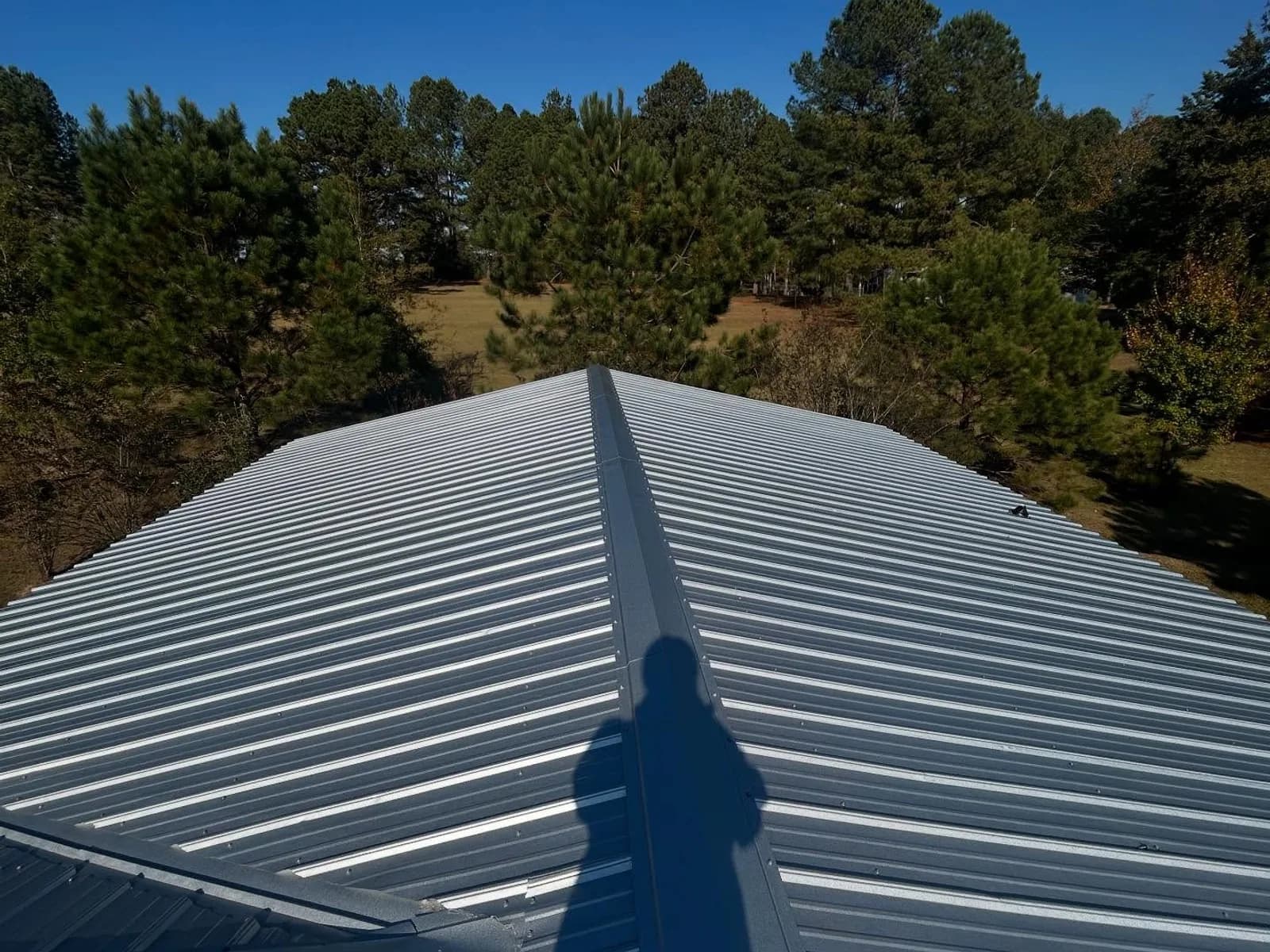 Metal roofing
Choose your path
Which building are we roofing?
Materials & options
Materials & specs, in plain language
The vocabulary you'll hear in a metal roofing conversation: decoded honestly.
Gauge (26 vs 29)
Steel thickness, lower number means thicker. 26 gauge is stiffer and more dent-resistant; 29 gauge is lighter on the budget. We install both and recommend by application.
Galvalume vs painted steel
Galvalume is a bare aluminum-zinc coated steel with a silvery agricultural look; painted panels add a baked-on color finish with long fade resistance.
Panel profiles
Standing seam (concealed fasteners, raised vertical locks), and ribbed exposed-fastener profiles like R-panel. The profile drives cost, look, and maintenance.
Straight comparison
Metal vs. shingle, honestly
We install both systems, so we don't need to win this argument either way. Here's the straight comparison.
Metal
- Higher up-front cost
- Commonly outlasts two shingle roofs
- Excellent wind and shed performance
- Reflects summer heat
- Standing seam hides its fasteners: less routine upkeep, though flashings still need periodic checks
Architectural shingle
- Most affordable up front
- 15–25 year typical life here
- Strong performance when installed to spec
- Easiest repairs and color matching
- The right call for many budgets and timelines
Which metal system fits which building
“Metal roof” covers everything from a concealed-fastener architectural system on a farmhouse to a structural panel spanning open purlins on a warehouse, and picking by appearance alone is how buildings end up with the wrong panel. The forks that actually matter: concealed versus exposed fasteners, architectural panels (which need a solid deck under them) versus structural panels (engineered to span open framing), and the gauge of the steel itself, where a lower number means thicker metal, so 24 gauge is heavier than 26, and 26 heavier than 29.
Two behaviors are worth knowing before any panel conversation. Minimum slope varies by profile: some mechanically seamed and structural systems are approved on very low slopes, while snap-lock and most exposed-fastener profiles commonly want around 3:12, no single number covers all metal. And oil canning: visible waviness in flat panel areas, is a cosmetic behavior of light-gauge flat metal, more visible with wider pans, thinner steel, and dark colors; it isn't a structural failure, but it's the kind of thing to discuss before choosing a 24-inch pan in gloss black. Closer to the coast, corrosion resistance and wind-uplift engineering join the list.
| System | Typical building | Fasteners | Typical gauge | Substrate | Slope capability | Maintenance note | Relative cost |
|---|---|---|---|---|---|---|---|
| Residential standing seam | Homes, porches, barndominiums | Concealed clips | 24–26 | Solid deck | Snap-lock commonly ~3:12+ | Flashings and penetrations checked periodically | Higher initial investment |
| Residential exposed fastener | Homes, shops, barns | Exposed gasketed screws | 26–29 | Deck or open framing | Commonly ~3:12+ per profile | Fastener washers need periodic inspection | Moderate initial investment |
| Commercial standing seam | Churches, schools, offices | Concealed clips | Commonly 24 | Solid deck | Varies, seamed profiles go lower | Concealed field, detailed flashings | Higher initial investment |
| Structural standing seam | PEMBs, large facilities | Concealed clips at purlins | 24–22 | Open purlins | Certain profiles approved very low | Engineered assembly, inspected seams | Higher initial investment |
| R-panel | Shops, storage, walls | Exposed gasketed screws | Commonly 26 | Deck or framing per version | Profile- and sealant-dependent | Exposed washers need periodic inspection | Lower initial investment |
| PBR panel | Metal buildings, warehouses | Exposed, through-fastened | 26 (24/22 options) | Open purlins | Some systems approved near low slopes | Laps and fasteners on the inspection list | Lower initial investment |
FAQ
Metal roofing questions, answered
Is metal roofing worth the extra cost?
Do you do metal for houses, businesses, or both?
Will a metal roof make my house look industrial?
Does hail ruin metal roofs?
Ready for a roof you don't have to think about?
Schedule a free inspection or get an instant estimate right now. $0 down financing available through GoodLeap.