
Residential metal roofing
Exposed-Fastener Metal Roofing for Mississippi Homes
Exposed-fastener metal: the practical path to a metal roof
Ribbed panels fastened directly to the structure, simpler to install, significantly more affordable, and genuinely tough. For many homes, shops, and barns across South Mississippi, it's the system that makes metal make sense.
Honest value, clearly explained
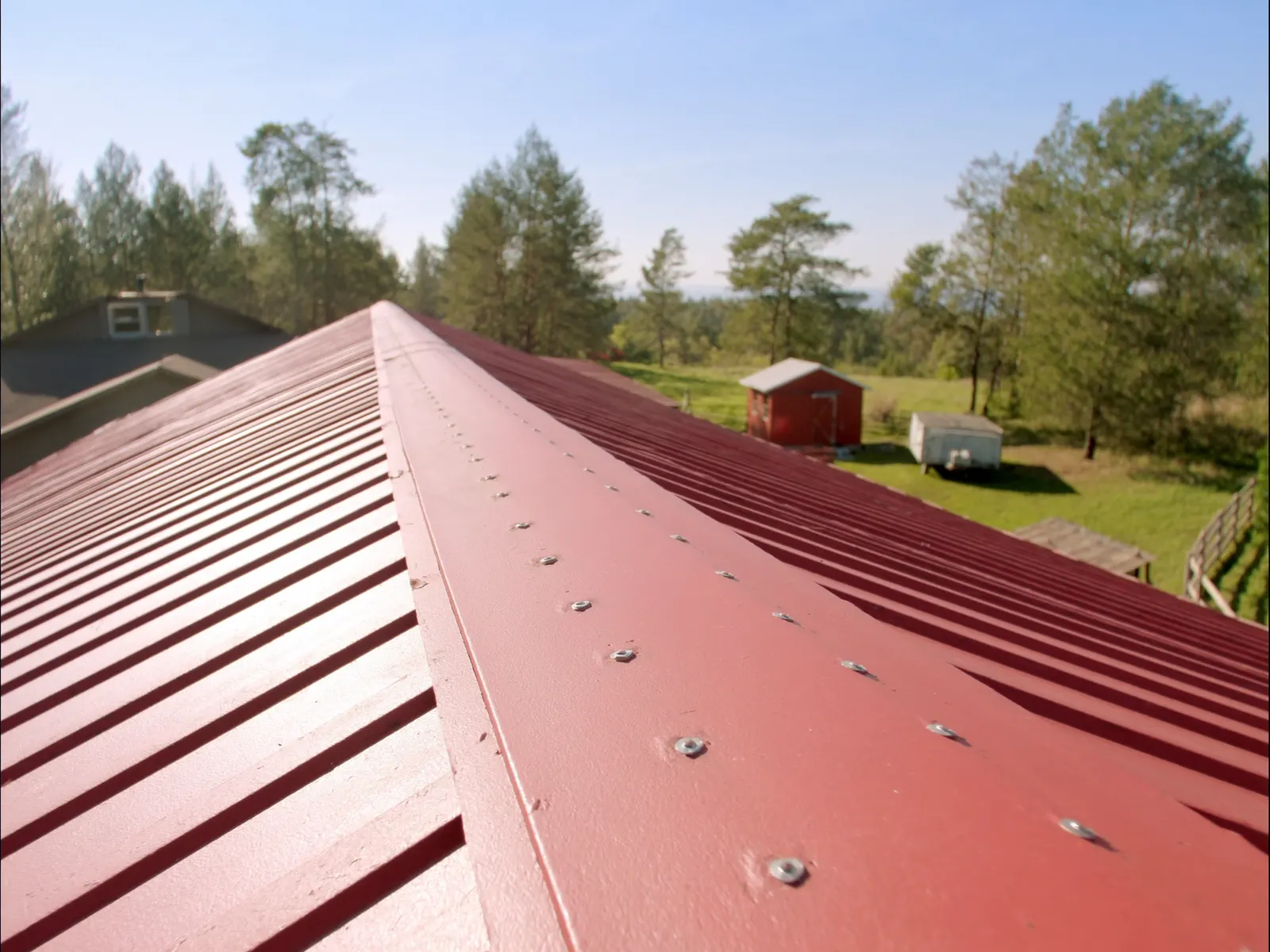
Exposed-fastener panels are the most economical way to put metal on a roof: wide ribbed sheets screwed straight to the framing or decking with gasketed fasteners. Less labor, less material complexity, and a price that can land surprisingly close to premium shingles, with metal's service life and wind performance in the bargain.
We'll be straight about the trade-off, because there is one: those fasteners are exposed to the sun, and their sealing washers age over the years. A screw checkup as the roof ages is part of honest ownership of this system. That's the difference you're saving money on versus standing seam, and for plenty of buildings, it's a perfectly good trade.
Where does it shine? Homes where budget is real, barndominiums, workshops, barns, porches, and any structure where a clean ribbed profile fits the look. It's a system we install constantly, and installed well, it earns its popularity.
When exposed fastener is the smart buy
You want metal on a budget
It's the most affordable route to metal's life span and storm performance.
Barndominiums & farm structures
The classic system for shops, barns, and metal-building homes, and it looks right on them.
You're tired of losing shingles
Steel panels fastened to the manufacturer's pattern hold on well in the storms that strip aging shingles.
You think in decades
Even the economical metal option is a decades-long roof when installed and maintained properly.
Porches and additions
A practical match for porch roofs and additions: even alongside a shingle main roof.
You're fine with a checkup
You understand the honest trade: periodic fastener checks in exchange for the lower price.
The two panel families we install
Exposed-fastener panels aren't one product, the market splits into two representative families. The classic ag/residential rib panel is the familiar barn-and-farmhouse profile; the commercial-style panel (the R-panel type) carries taller, wider-spaced ribs and heavier common gauges. The 29-gauge Gibraltar Rib is one ag-family line we install regularly on area projects.
The table lays out the representative differences; exact rib geometry, gauges, and fastening requirements come from the specific manufacturer's panel manual.
| Feature | Ag / residential rib panel | Commercial-style panel (R-panel type) |
|---|---|---|
| Coverage width | About 36 inches | About 36 inches |
| Rib height | Roughly 3/4-inch major ribs | Roughly 1.25-inch ribs |
| Rib spacing | Often about 9 inches on center | About 12 inches on center |
| Common gauges | Commonly 26 and 29 gauge | Commonly 26 gauge, with heavier options |
| Typical use | Homes, porches, barns, sheds, barndominiums | Shops, larger outbuildings, commercial buildings |
26 or 29 gauge: what the number buys you
Gauge numbers run opposite to thickness, 26 gauge is thicker steel than 29. On an exposed-fastener roof that translates to stiffer panels between supports, better resistance to hail denting and foot traffic, and a flatter appearance in the panel flats.
29 gauge is the economical staple of the ag-panel world, and it's an honest fit for barns, sheds, porches, and budget-driven projects. For a house you plan to keep, especially one with long panel runs or hail worries. We usually recommend stepping up to 26 gauge where the budget allows.
Screws, washers, and why driving depth decides the roof
Every fastener passes through the panel and seals with a compressible gasketed washer under the screw head. That washer only works when the screw goes in straight and stops at the right depth: underdrive it and the washer never compresses, leaving a gap; overdrive it and the washer splits or squeezes out, and the dimpled panel can pool water at the screw. A crooked screw does both at once.
Placement is not improvised either. The panel manufacturer's manual dictates where screws land relative to ribs and how the pattern runs, and side laps and end laps may require sealant depending on the panel and slope. Panel length, the eave-to-ridge dimension, temperature movement, and the manufacturer's limits all shape the layout before the first screw is driven.
Fastener maintenance, without the myths
You'll read online that all the screws on a metal roof must be replaced every 10 years. That's a myth, no calendar applies to every roof. Gasketed washers weather in the sun and panels move with temperature, so fasteners deserve periodic inspection over the roof's life, with screws re-seated or replaced based on what the inspection actually finds.
How fast washers age depends on the washer material, sun exposure, how much the panels move, and, more than anything, whether the screws were driven correctly on day one. A well-installed roof may go many years before any fastener needs attention; a badly installed one can leak the first spring.
On a decked house vs. an open-framed outbuilding
The same panel lives two different lives. On a house, it installs over solid decking with a metal-rated underlayment beneath, improving sound, adding a secondary water barrier, and helping manage the condensation humid Mississippi nights produce. On a pole barn or shop, panels commonly screw straight to open purlins with no deck: economical and normal for those buildings, with a different sound, condensation, and fastener-loading picture.
Slope matters in both cases: many exposed-fastener profiles want roughly 3:12 or steeper without special detailing, while certain R-panel and PBR-type assemblies are approved for lower slopes with sealed laps. We check the profile's approval against your actual pitch, every time.
Where exposed fastener sits against your alternatives
Versus standing seam: you're trading concealed fasteners for a meaningfully lower price. The panels are comparably tough steel, but thousands of gasketed screws sit in the weather with the periodic checkups that come with them. For outbuildings and budget-led projects the trade usually favors exposed fastener; for a forever home it's a genuine coin worth flipping carefully.
Versus shingles: exposed-fastener metal commonly costs somewhat more installed but brings longer expected service, panels screwed to the manufacturer's pattern hold on well in the thunderstorm winds that strip aging shingles, though no roof of any type is immune to severe storms. If the ribbed look suits your house, it's one of the strongest value plays in roofing.
Our approach
How we install exposed-fastener metal
Spec the panel and gauge
Profile, 26 or 29 gauge, and color, chosen for your structure and budget with the trade-offs laid out.
Prep the substrate
Sound decking and metal-rated underlayment on homes; purlin attachment on ag and shop structures.
Fasten to spec
Gasketed screws driven straight to the right depth, snug, not crushed, in the manufacturer's pattern. This detail decides the roof's future.
Trim out and walk through
Ridge, eave, and gable trim, sealed penetrations, and a final walkthrough with you.
Factors that shape an exposed-fastener quote
Panel family and profile
Ag rib panels and R-panel-style profiles carry different material costs, and the profile has to match the building's structure and slope.
Gauge selection
26 gauge costs more than 29: worth it on homes and long panel runs, often unnecessary on small outbuildings.
Decked or open-framed
A house needs tear-off, deck repair, and metal-rated underlayment; a purlin-framed barn skips those lines entirely.
Trim and closures
Ridge, eave, gable trim, and foam closure strips at ribs: small parts that add up and matter for weather-tightness.
Penetrations and transitions
Pipes, flues, valleys, and porch tie-ins each add detailing time on a panel system.
Roof size and cut-up
Simple big rectangles install fast; complex, cut-up roofs spend the savings on cutting and fitting.
Storm damage? We speak insurance.
Thorough documentation, reports in the format adjusters expect, and someone on your side at the adjuster meeting.
How claim assistance works$0 down financing available
Apply through our partner GoodLeap in minutes and see the plans you qualify for, decide with real numbers in hand.
Explore financing optionsLifetime warranty
Manufacturer limited-lifetime warranty options are available on qualifying roofing systems. Ask what applies to your roof at your free inspection.
Start with a free inspectionFAQ
Exposed-Fastener Metal Roofing questions, answered
How much cheaper is exposed fastener than standing seam?
Will the screws leak eventually?
Do all the screws really need replacing every 10 years?
Is exposed-fastener metal okay for a house, or just barns?
What's the difference between 26 and 29 gauge panels?
Related services
You may also need
Service area
Where we provide exposed-fastener metal roofing
Based in Hattiesburg and serving Mississippi within about two hours, from the Pine Belt to the Gulf Coast.
- Purvis
- Sumrall
- Seminary
- Collins
- Ellisville
- Richton
- Waynesboro
- Leakesville
- Columbia
- Poplarville
- Wiggins
- Perkinston
- Lucedale
- Kiln
- McHenry
- Saucier
- Diamondhead
- Bay St. Louis
- Pass Christian
- Long Beach
- D'Iberville
- Ocean Springs
- Moss Point
- Pascagoula
- Crystal Springs
- Jackson
- Meridian
Don't see your town? If you're within about two hours of Hattiesburg, we most likely serve you.
Ready for a roof you don't have to think about?
Schedule a free inspection or get an instant estimate right now. $0 down financing available through GoodLeap.