
Storm damage
When the weather turns, we answer
Hail cells, straight-line winds, tropical systems, South Mississippi's weather earns its reputation. When your roof takes the hit, one local team handles the whole aftermath: documentation, emergency protection, the insurance claim, and the restoration.
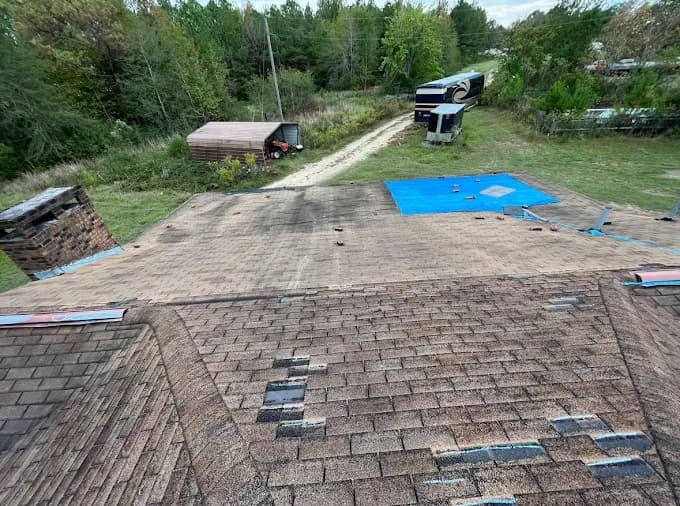 Storm damage inspection
Storm Center: live Mississippi weather alerts, the first-hours checklist, and real damage photos, all in one place.
Open the Storm CenterWhat storms do here
The damage we document every season
Real inspection photos from South Mississippi roofs. This is what we look for and what your insurer needs to see.
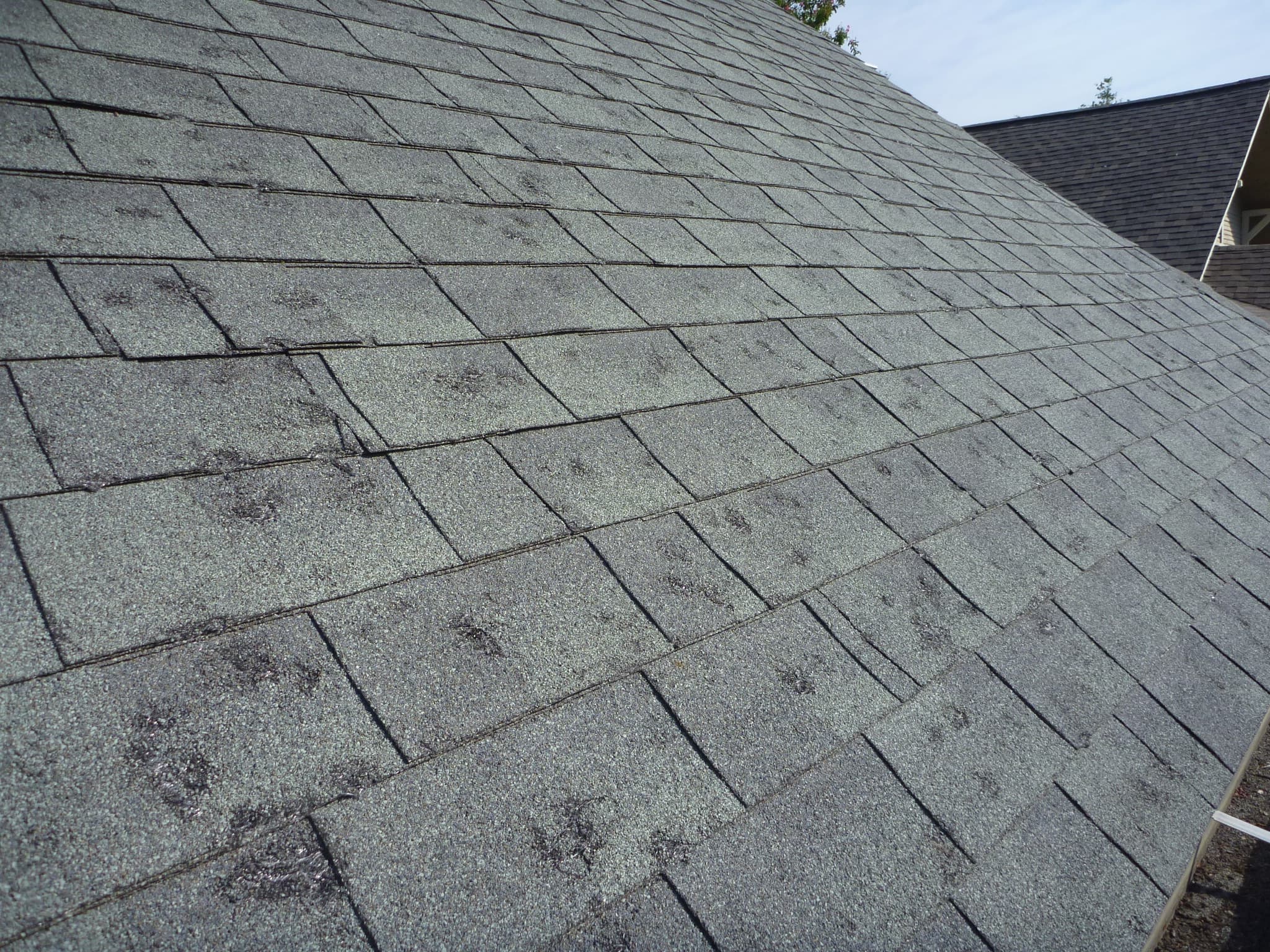
Hail damage
Bruised shingles and dented metal that may not leak for months, but shorten the roof's life and are time-sensitive for claims.

Wind damage
Creased, lifted, and missing shingles from straight-line winds and tropical systems. The region's most common storm claim.
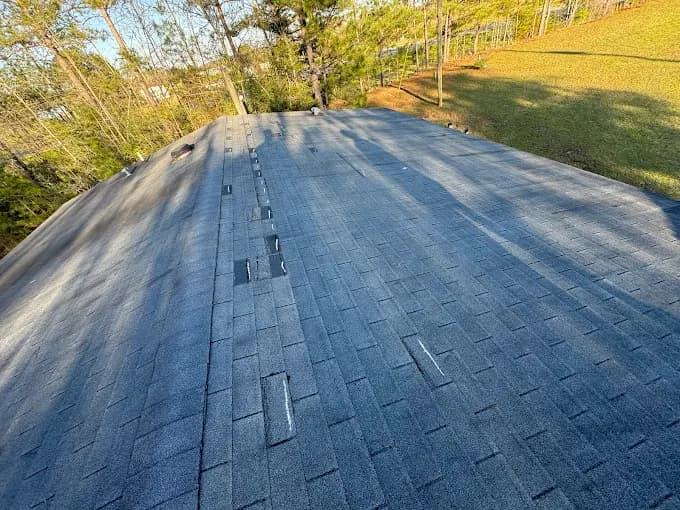
Missing shingles
Open spots that let the next rain straight through to the decking. Small to see, urgent to fix.
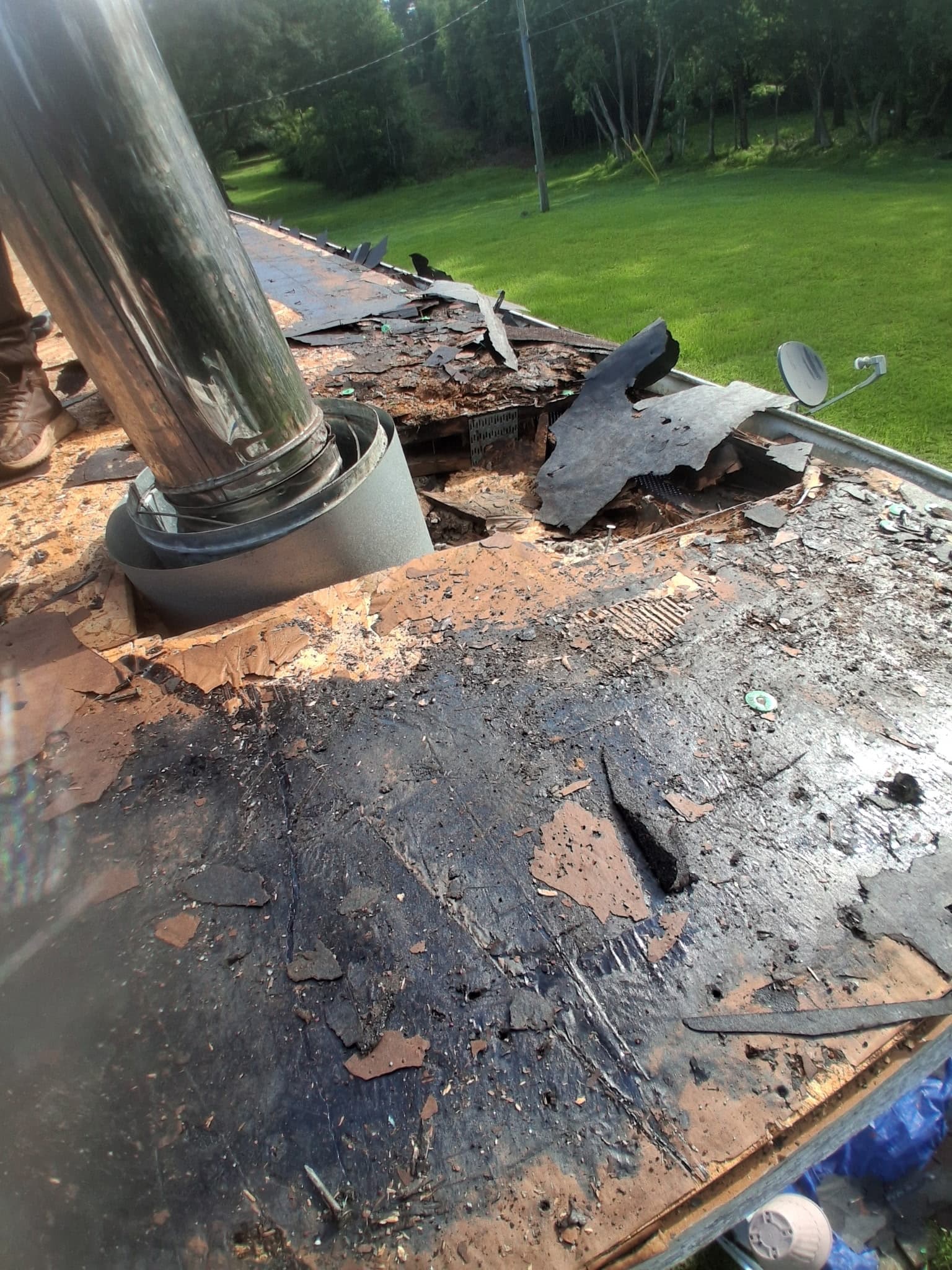
Tree & debris impact
From a limb strike to a trunk through the ridge, structural checks, emergency protection, and repair in the right order.
Our approach
Our storm response, start to finish
Rapid inspection & documentation
We assess and photograph every impact point: roof level, not from the driveway.
Emergency protection
Active openings get professionally tarped so the damage stops growing while the process runs.
Insurance claim support
Our documentation goes to your insurer, and we can meet the adjuster on your roof.
Full restoration
Repair or replacement to the approved scope, one crew sees it through to the final walkthrough.
The first hour after the storm
What you do in the first hour matters more for safety than for the roof. If a tree has hit the structure or the ceiling is sagging with water weight, get everyone out and stay out until it's been looked at. Do not climb onto a wet or storm-damaged roof, that's the single most common way a bad day gets worse, and everything on the roof can be documented by people with fall protection and a reason to be up there.
- Kill power to rooms with water coming through fixtures or hitting outlets.
- Catch what you can and move furniture, electronics, and documents out of the drip line.
- Photograph interior damage before you clean anything up: stains, wet flooring, fallen debris, standing water.
- Keep damaged materials (shingles in the yard, fallen limbs cut from the roof) until they've been photographed.
- Save every receipt for tarps, fans, or emergency work: insurers commonly reimburse reasonable emergency mitigation, and the receipts are the record.
- Then call us. The emergency line answers 24/7, and tarping an active opening is the first move. It stops the damage from compounding while everything else runs.
Storm damage vs. wear, and why it matters
Wind damage shows up as creased, lifted, or missing shingles. A crease breaks the shingle's seal even when it lays back down, which is why a roof can look fine from the driveway and still be compromised. Hail shows up as bruising in the shingle mat and dents in the soft metals: vents, gutters, and flashing take dents at hail sizes that shingles can hide. Tree and debris impact ranges from a scuff to a structural problem, and water entry from any of them can travel along decking and rafters before it ever shows on a ceiling, damage commonly exists well before a leak announces it.
Here's the honest part many storm-season visitors won't tell you: age-related deterioration is not storm damage, and the insurance company, not the contractor, decides what's covered. Blistering, granule loss from age, and old installation problems generally aren't claimable, and pretending otherwise sets homeowners up for denied claims and bad decisions. Our inspection documents what's actually there, dates it against the storm where the evidence supports that, and tells you plainly when a claim isn't worth filing.
How to spot a storm chaser
After every named storm and hail map, out-of-area crews sweep through South Mississippi. Some do fine work; many don't stay long enough for you to find out. Signals worth your attention before you sign anything:
- They knocked on your door first, and the truck has out-of-state plates or a magnetic sign.
- They declare your roof “totaled” on the spot, before any insurer has evaluated the loss.
- They ask you to sign an assignment of benefits or contingency agreement “just to get the process started.”
- They offer to “take care of” your deductible: that's insurance fraud, and it's the homeowner who carries the risk.
- There's no local address, no Mississippi license number to verify, and no local jobs to drive past.
Homes and commercial buildings after the same storm
The same weather hits both, but the response differs. On homes, the priorities are tarping openings, documenting shingle and soft-metal damage, and walking the homeowner through a claim that most people only ever file once. On commercial buildings, the first moves are protecting inventory and operations, mapping where water is entering large low-slope assemblies (rarely directly above the drip), and coordinating documentation with property managers and adjusters, commercial claims carry more scope detail and more stakeholders. We run both, from the same office, with the same rule: document first, promise nothing the evidence doesn't support.
FAQ
Storm damage questions, answered
Should I call you or my insurance company first?
How soon after a storm should the roof be inspected?
What does the storm inspection cost?
A door-knocker says my roof is totaled. Should I sign?
Ready for a roof you don't have to think about?
Schedule a free inspection or get an instant estimate right now. $0 down financing available through GoodLeap.