
Residential roofing
Ventilation: the quiet system that saves your roof
In a climate this hot and humid, an unventilated attic cooks your shingles from below, strains your AC, and breeds moisture problems. Balanced intake and exhaust is one of the highest-value upgrades a South Mississippi roof can get.
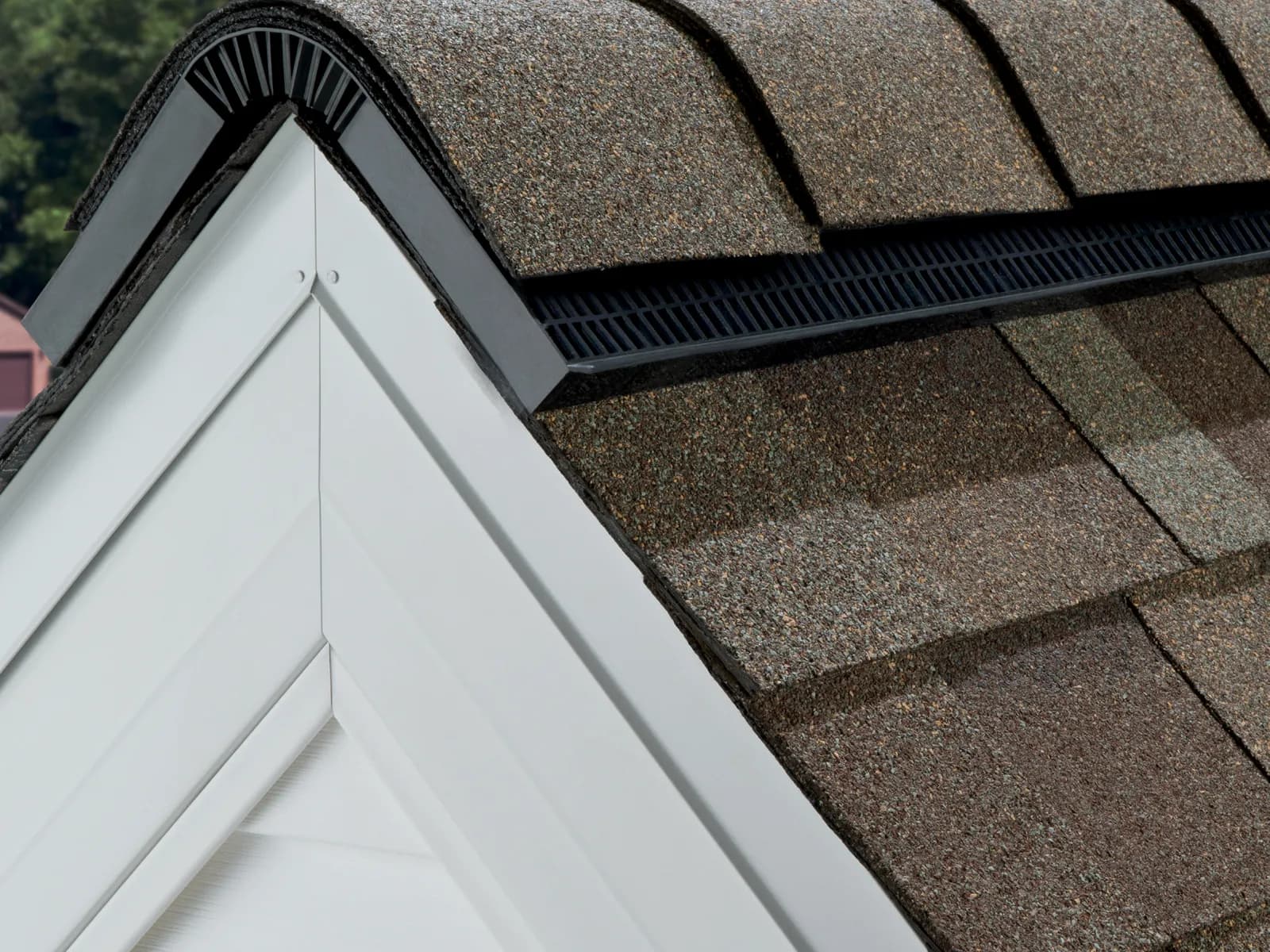 Attic ventilation
Why ventilation matters more here than almost anywhere
A Mississippi attic in July can run dramatically hotter than the air outside. That heat radiates down into your living space, makes your air conditioner run longer, and bakes your shingles from the underside, aging them years ahead of schedule. In winter and shoulder seasons, the problem flips to moisture: warm indoor air meeting cooler roof decking condenses, feeding mildew and rot.
The cure is balanced airflow: intake low at the soffits, exhaust high at the ridge, in proportions matched to your attic's size. It's simple physics, but it's routinely botched: blocked soffits, mixed exhaust types that short-circuit each other, or too little intake to feed the ridge vent. We assess what your attic actually has, and correct the system as a whole.
Signs your attic isn't breathing
Second floor won't cool down
Rooms under the roof that stay hot into the evening point to a heat-soaked attic.
Shingles aging early
Curling and granule loss on a roof that isn't old often means it's being cooked from below.
Moisture in the attic
Damp insulation, rusty nail tips, or a musty smell mean condensation is winning.
Blocked or painted-shut soffits
Exhaust vents can't work without intake, blocked soffits are the most common failure we find.
Mold or mildew spots
Dark staining on the underside of the roof deck is a ventilation problem announcing itself.
High summer power bills
An overheated attic makes your AC fight the roof all day, every day.
Intake and exhaust: airflow is a loop, not a hole
Attic ventilation only works as a circuit: cool air enters low through intake vents at the soffits, heated air exits high through exhaust at or near the ridge. Cut the loop anywhere and the system stalls. A ridge vent over blocked soffits has nothing to pull from, so it moves little air or pulls from the wrong places, including conditioned air through gaps in the ceiling plane.
That's why "add more exhaust" is the wrong reflex, more exhaust with inadequate intake just changes where the makeup air gets stolen from. Intake is where most local attics fail: soffit vents painted shut, screened over, or buried under insulation. It's usually the simpler side to fix, too.
How much ventilation? NFA and a worked example
Vents are rated by net free ventilating area (NFA). The actual open area air can pass through, always less than the vent's physical size. A common baseline is 1 square foot of NFA per 300 square feet of attic floor when qualifying conditions are met; some assemblies and code situations call for 1:150 instead. Neither ratio is a universal code requirement, and a roughly even intake-to-exhaust split is the usual target: with intake never the smaller share.
How the arithmetic runs for a hypothetical attic, so the vent ratings on a quote mean something.
| Step | Example figure |
|---|---|
| Attic floor area | 1,500 sq ft |
| Ratio applied | 1:300 (where qualifying conditions are met) |
| Total NFA target | 5 sq ft = 720 sq in |
| Intake share (soffits) | About half: roughly 360 sq in NFA |
| Exhaust share (ridge) | About half: roughly 360 sq in NFA |
Gable vents, ridge vents, and the short-circuit problem
Exhaust types don't stack. They compete. A ridge vent added above open gable vents can start using the gables as its nearest intake, pulling a short loop across the top of the attic while the soffit-to-ridge path barely moves. A powered fan near a ridge vent does the same, drawing its makeup air backward through the ridge instead of up from the soffits.
The fix is one coherent exhaust strategy with real intake behind it. When we install a ridge vent on a house with gable vents, we'll often recommend closing or baffling the gables so the airflow runs low to high, across the full attic.
Powered attic fans: the fine print
Powered fans move impressive air on paper, and on an attic with generous intake they can help. But a fan is indifferent to where its air comes from: with weak intake and a leaky ceiling plane, it can depressurize the attic and pull conditioned air out through can lights and hatches. You pay to cool air twice.
So powered ventilation is a case-by-case tool, not a default. Balanced passive soffit-and-ridge systems run around the clock with no motor to fail; we reach for power only where the attic needs it and the intake can feed it.
Baffles, insulation, and the moisture side of the story
The most common intake failure isn't the vent. It's insulation shoved into the eaves, plugging the airway where it starts. Baffles (rigid channels between the rafters at the eaves) hold the insulation back and keep the path open. Insulation upgrades miss this constantly: beautiful new insulation, suffocated attic.
Heat gets the attention, but moisture is the quieter threat here: humid air condensing on cooler decking feeds mildew, rusts nail tips, and delaminates sheathing. Ventilation carries that moisture out, but only if it isn't being fed extra. Bath fans and dryer vents must never terminate in the attic; every one we find dumping steam into the insulation gets rerouted outdoors, full stop.
The best time to fix ventilation is during a reroof
Every replacement includes a ventilation assessment, because mid-reroof is when fixing it costs the least: the ridge is open for a ridge vent, conflicting exhaust comes off with the old shingles, and the layout can be rebuilt without disturbing a finished roof. It also protects the new shingles, manufacturers commonly require adequate ventilation as a condition of coverage.
Our approach
How we fix attic airflow
Measure what's there
We inspect intake, exhaust, and attic conditions, and calculate what your attic size actually requires.
Design a balanced system
Intake at the soffits feeding exhaust at the ridge, without mixing vent types that short-circuit airflow.
Install and correct
Ridge vents, intake correction, and baffles where insulation is choking the soffits.
Verify the whole roof benefits
Proper ventilation supports your shingle manufacturer's requirements and helps the whole system reach its rated life.
How a balanced attic breathes
Where the air actually goes
A working attic is a chimney: cool air in low, hot air out high. Miss either half and the whole system stalls, which is exactly what we check for.
Cool air enters at the soffits
Intake vents low under the eaves pull fresh outside air into the attic, the half of the system most homes are missing or have painted shut.
It warms and rises
Attic air heats against the hot roof deck and climbs toward the peak, carrying summer heat and winter moisture up with it.
Hot air exhausts out the ridge
The ridge vent lets that heat and humidity escape at the very top: continuously, with no moving parts, so the whole roof runs cooler and drier.
What affects the cost of ventilation work?
Ventilation corrections range from an afternoon of baffles to a full exhaust redesign.
Attic size and layout
The NFA target scales with floor area; complex rooflines split the attic into zones.
Condition of the intake
Open soffits needing baffles is one job; solid or painted-shut soffits needing new intake is another.
Ridge length available
Hip-heavy roofs with short ridges may need supplemental exhaust types.
Removing what's fighting the system
Closing gable vents and capping redundant exhaust so the airflow runs one way.
Standalone or during a reroof
Cutting a ridge vent into an existing roof is routine; during replacement it costs the least.
Exhaust rerouting
Bath fans or dryer ducts ending in the attic get rerouted outdoors.
Access
Low-clearance attics and deep blown-in insulation slow the interior work.
Real projects
The exhaust vents we install
The right exhaust type depends on your roof's shape and existing intake. Ridge vents lead for balanced airflow; turbines, box vents, and powered fans each earn their place on the right home.
Storm damage? We speak insurance.
Thorough documentation, reports in the format adjusters expect, and someone on your side at the adjuster meeting.
How claim assistance works$0 down financing available
Apply through our partner GoodLeap in minutes and see the plans you qualify for, decide with real numbers in hand.
Explore financing optionsLifetime warranty
Manufacturer limited-lifetime warranty options are available on qualifying roofing systems. Ask what applies to your roof at your free inspection.
Start with a free inspectionFAQ
Roof & Attic Ventilation questions, answered
Does attic ventilation really affect shingle life?
What's the best ventilation setup for this climate?
Can you add ventilation without replacing the roof?
Do powered attic fans help?
Is the 1-in-300 ventilation ratio a code requirement?
Should my gable vents stay open if I add a ridge vent?
Is it okay for my bathroom fan to vent into the attic?
Related services
You may also need
Asphalt Shingle Roofing
Ventilation is what lets a quality shingle system reach its full life.
Learn moreRoof Replacement
Every replacement we do includes a ventilation assessment. It's the most economical time to fix it.
Learn moreGutters
Moisture management from the ridge to the ground: airflow and drainage together.
Learn more
Service area
Where we provide roof & attic ventilation
Based in Hattiesburg and serving Mississippi within about two hours, from the Pine Belt to the Gulf Coast.
- Purvis
- Sumrall
- Seminary
- Collins
- Ellisville
- Richton
- Waynesboro
- Leakesville
- Columbia
- Poplarville
- Wiggins
- Perkinston
- Lucedale
- Kiln
- McHenry
- Saucier
- Diamondhead
- Bay St. Louis
- Pass Christian
- Long Beach
- D'Iberville
- Ocean Springs
- Moss Point
- Pascagoula
- Crystal Springs
- Jackson
- Meridian
Don't see your town? If you're within about two hours of Hattiesburg, we most likely serve you.
Ready for a roof you don't have to think about?
Schedule a free inspection or get an instant estimate right now. $0 down financing available through GoodLeap.