
Commercial roofing
Commercial Roofing Contractor in Hattiesburg, MS
Protect your property, your tenants, and your budget
Flat, metal, and everything between: engineered proposals, installation phased around your operations, and one accountable local contractor across your whole portfolio. Licensed by the Mississippi State Board of Contractors for commercial work.
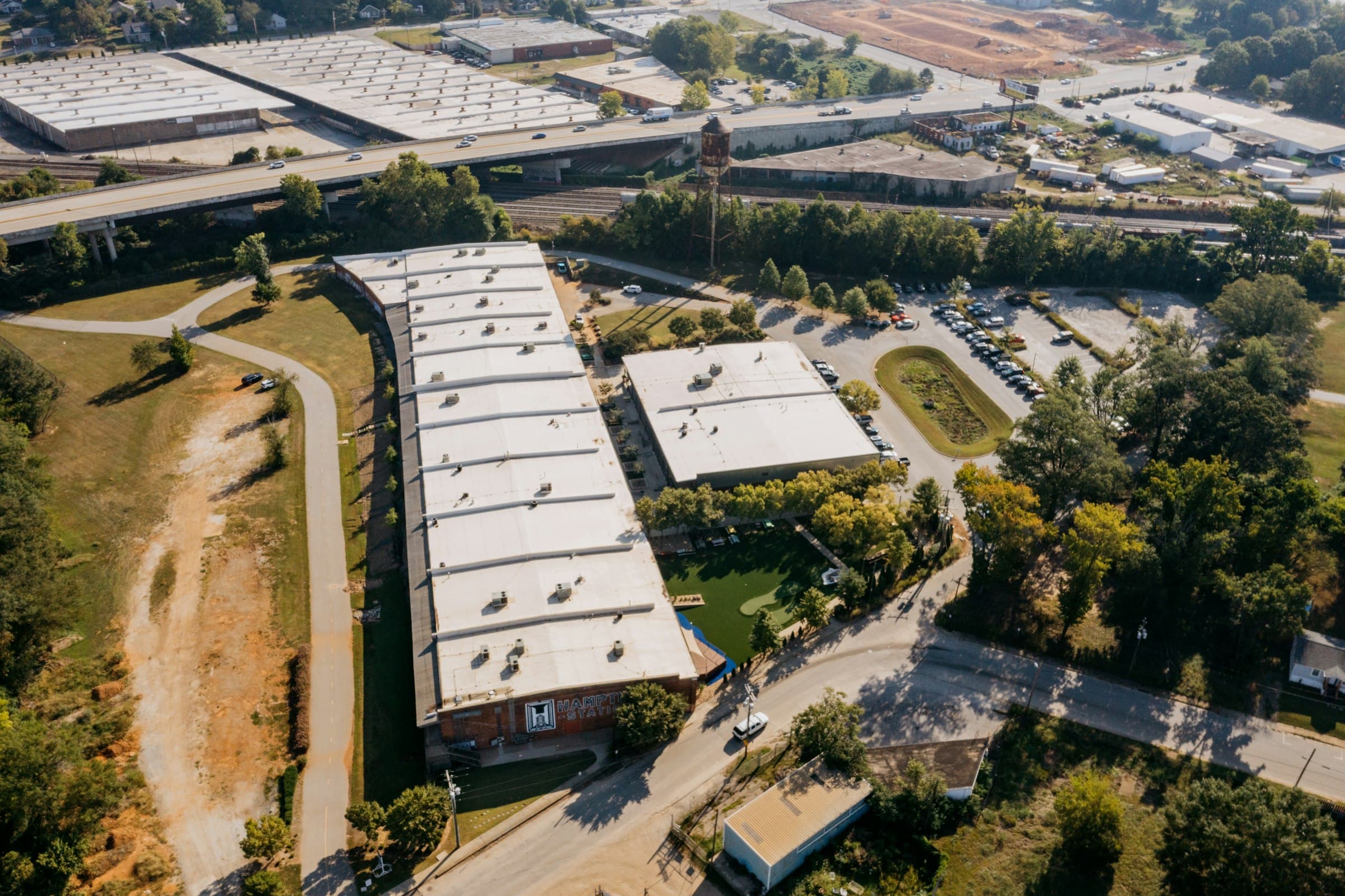 Commercial low-slope roofing
- MSBOC Commercial License #27720-SC
- MSBOC Residential License #R22245
- Fully insured & bonded
- GAF Certified Contractor
Licensed for commercial roofing in Mississippi
Southeast Roofing LLC holds Mississippi State Board of Contractors Commercial Certificate of Responsibility 27720-SC, alongside residential license R22245. Mississippi requires a commercial license for commercial jobs over $50,000. Below that, local city or county requirements may still apply.
Commercial services
Every system a facility needs
One accountable contractor for every system on the building, from emergency repairs to full capital replacements.
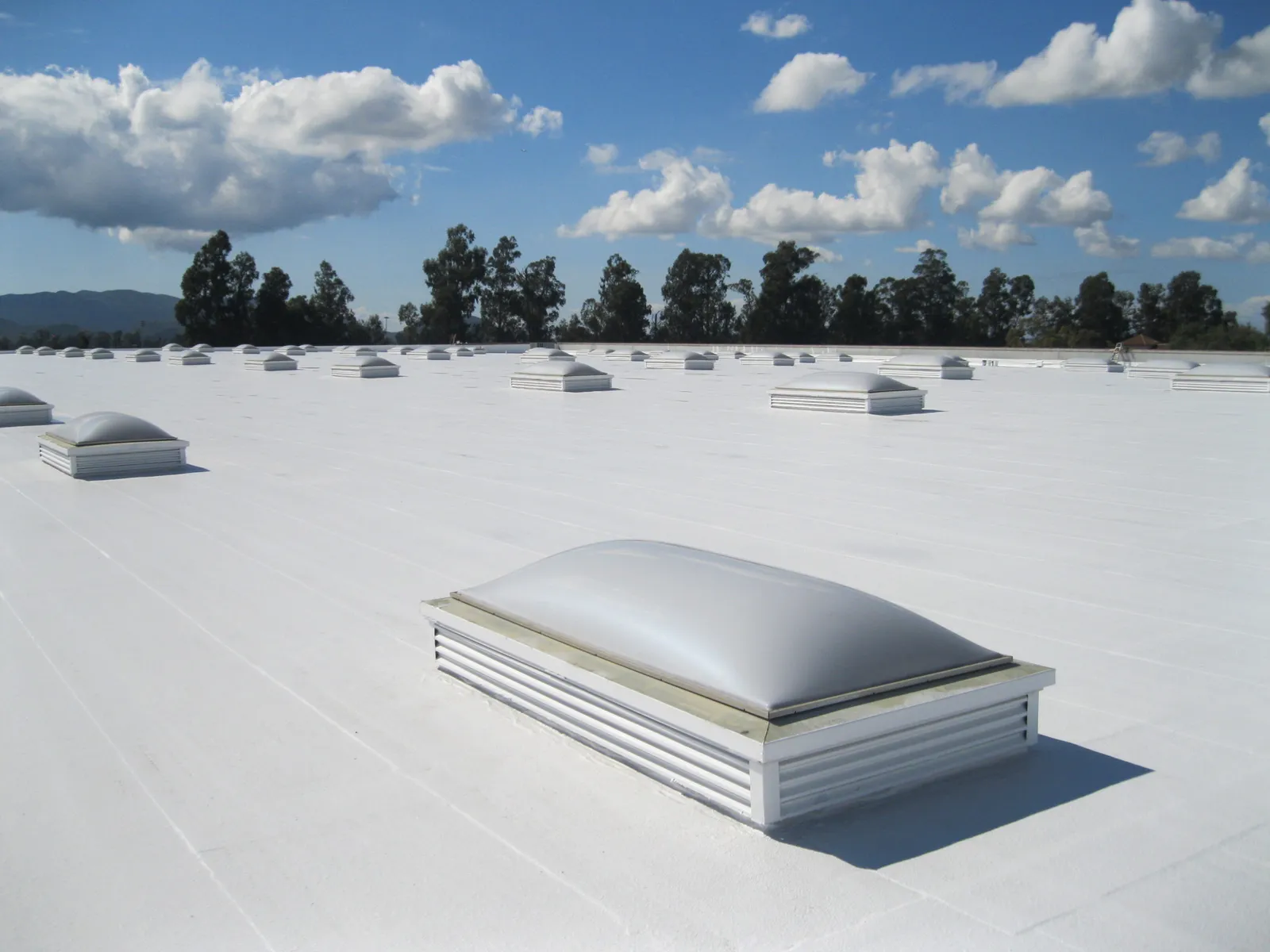
TPO Roofing
The reflective single-ply workhorse of low-slope roofing.
Learn more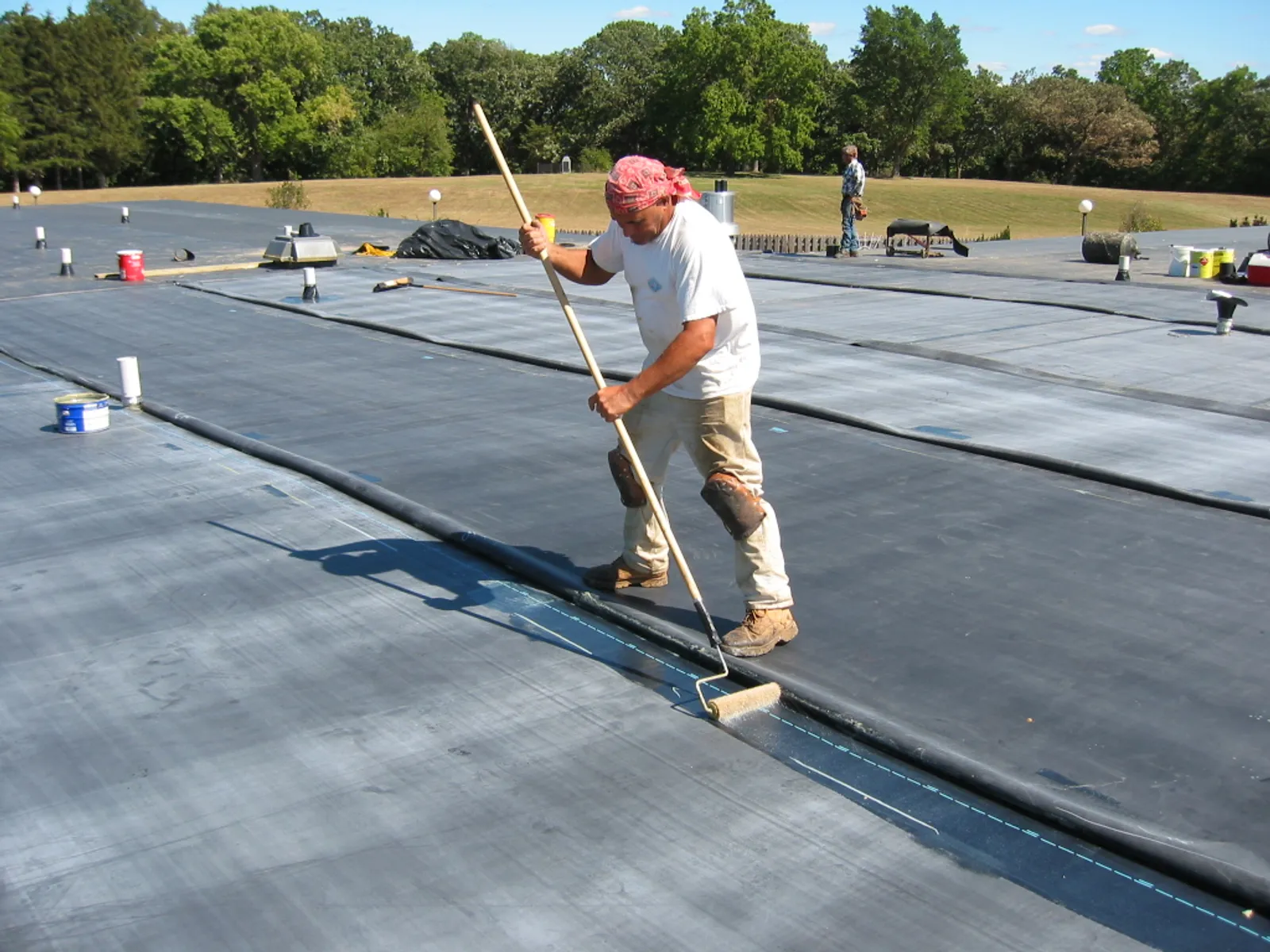
EPDM Roofing
Rubber membrane with a 50-year track record.
Learn more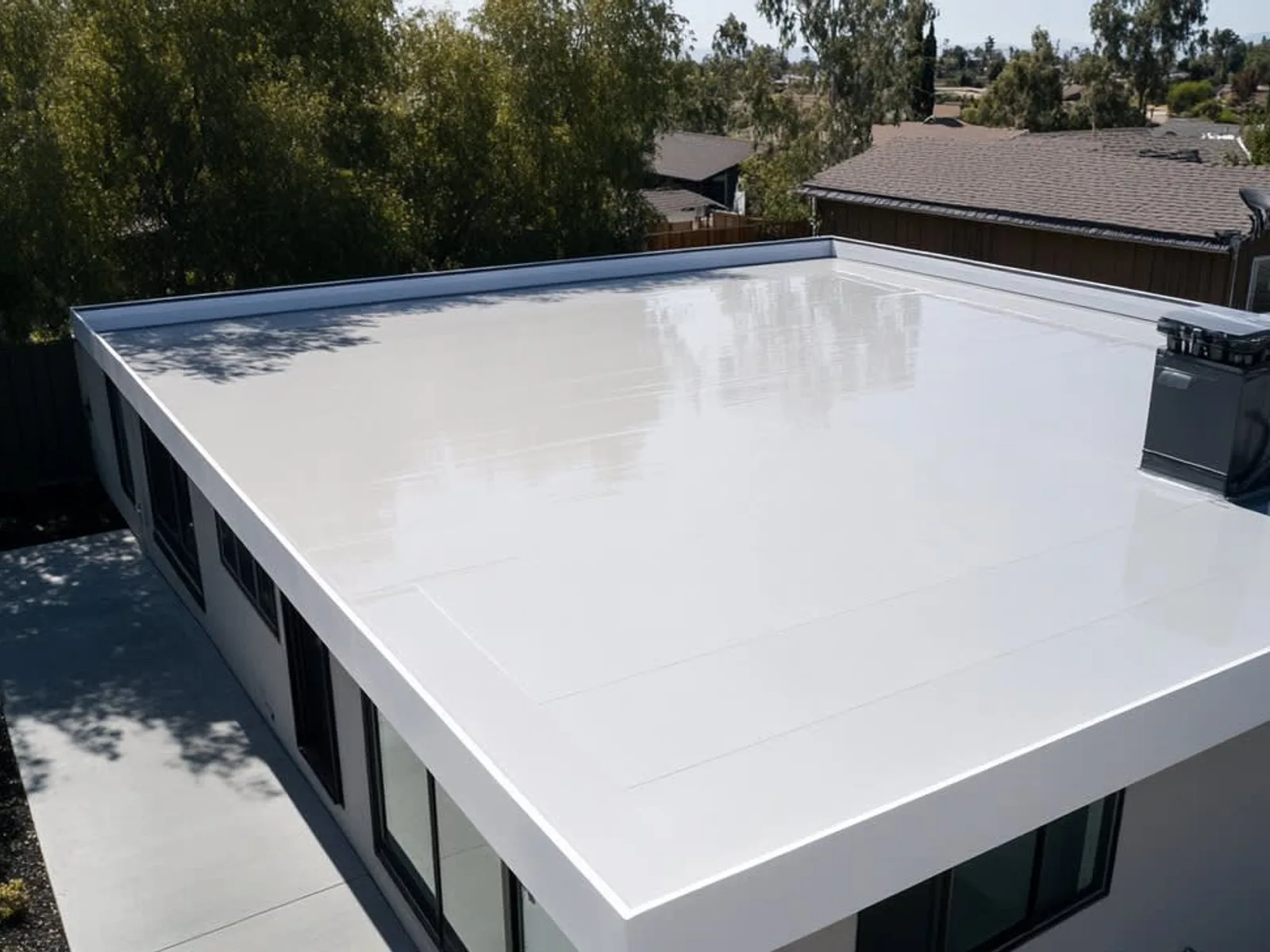
PVC Roofing
Grease and chemical resistance for demanding roofs.
Learn more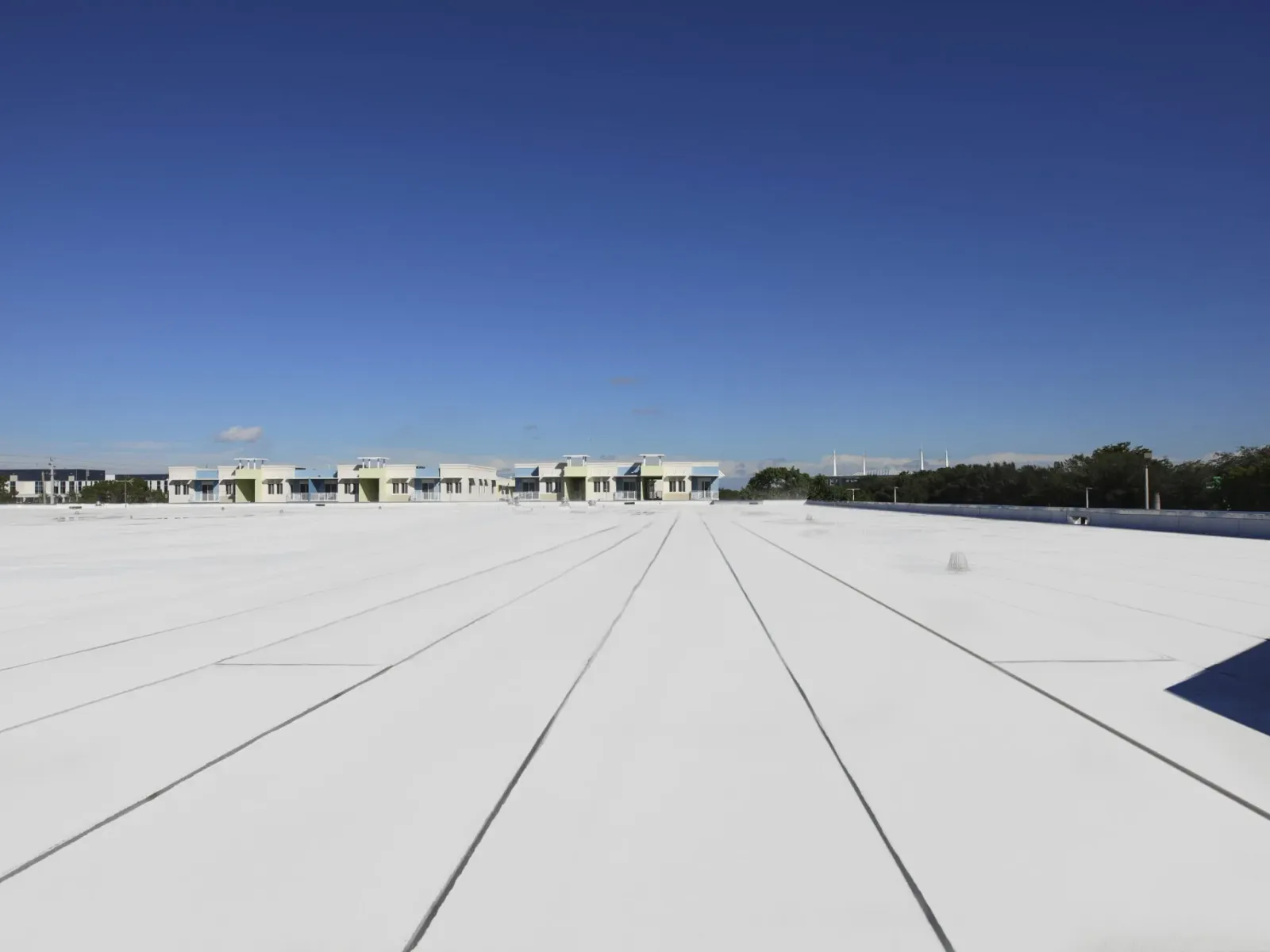
Modified Bitumen
Multi-ply redundancy for high-traffic roofs.
Learn more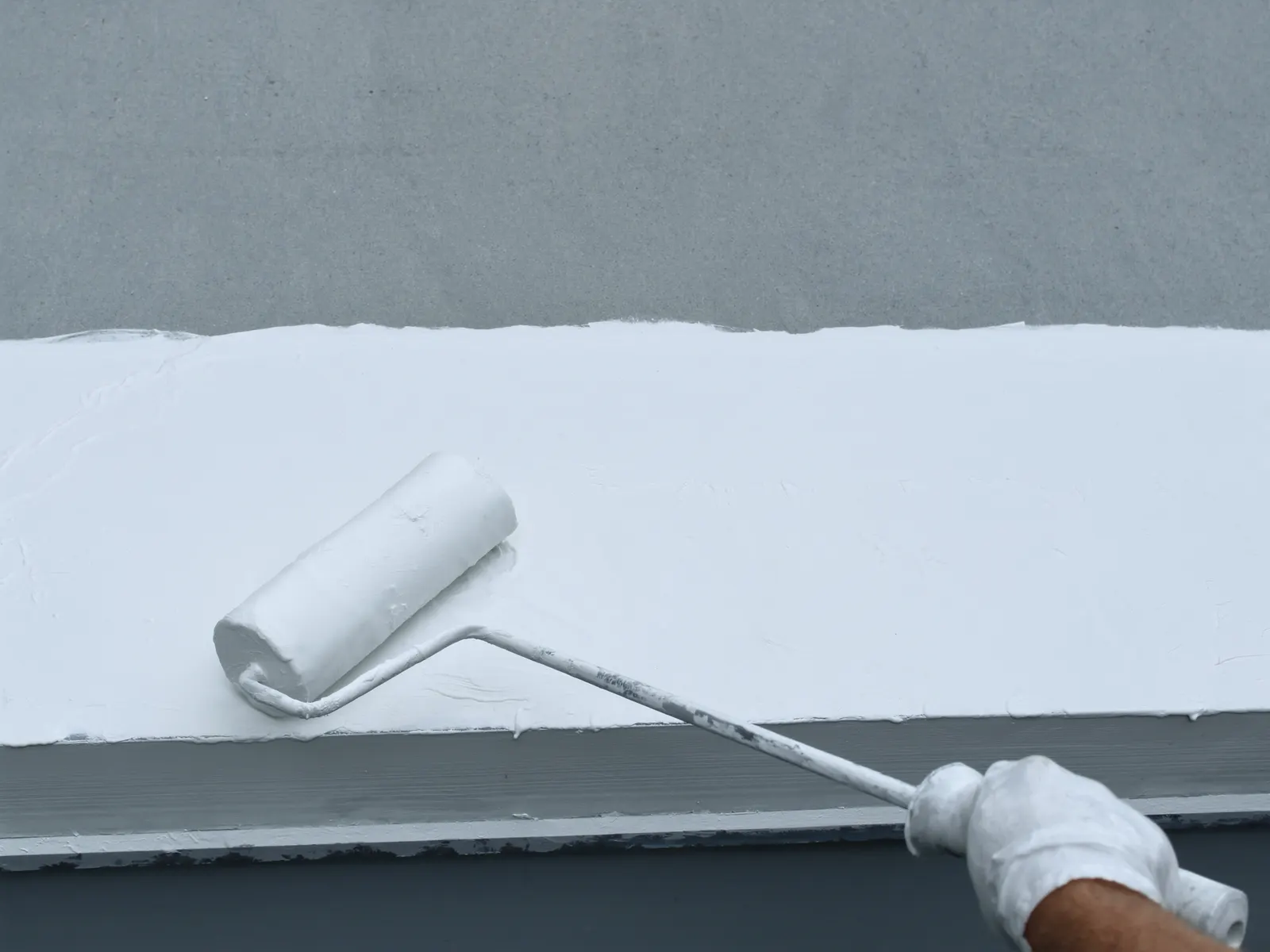
Roof Coatings
Silicone, acrylic, and urethane restoration for roofs that qualify.
Learn moreSilicone Roof Coating
The ponding-tolerant chemistry, its trade-offs, and when to use something else.
Learn more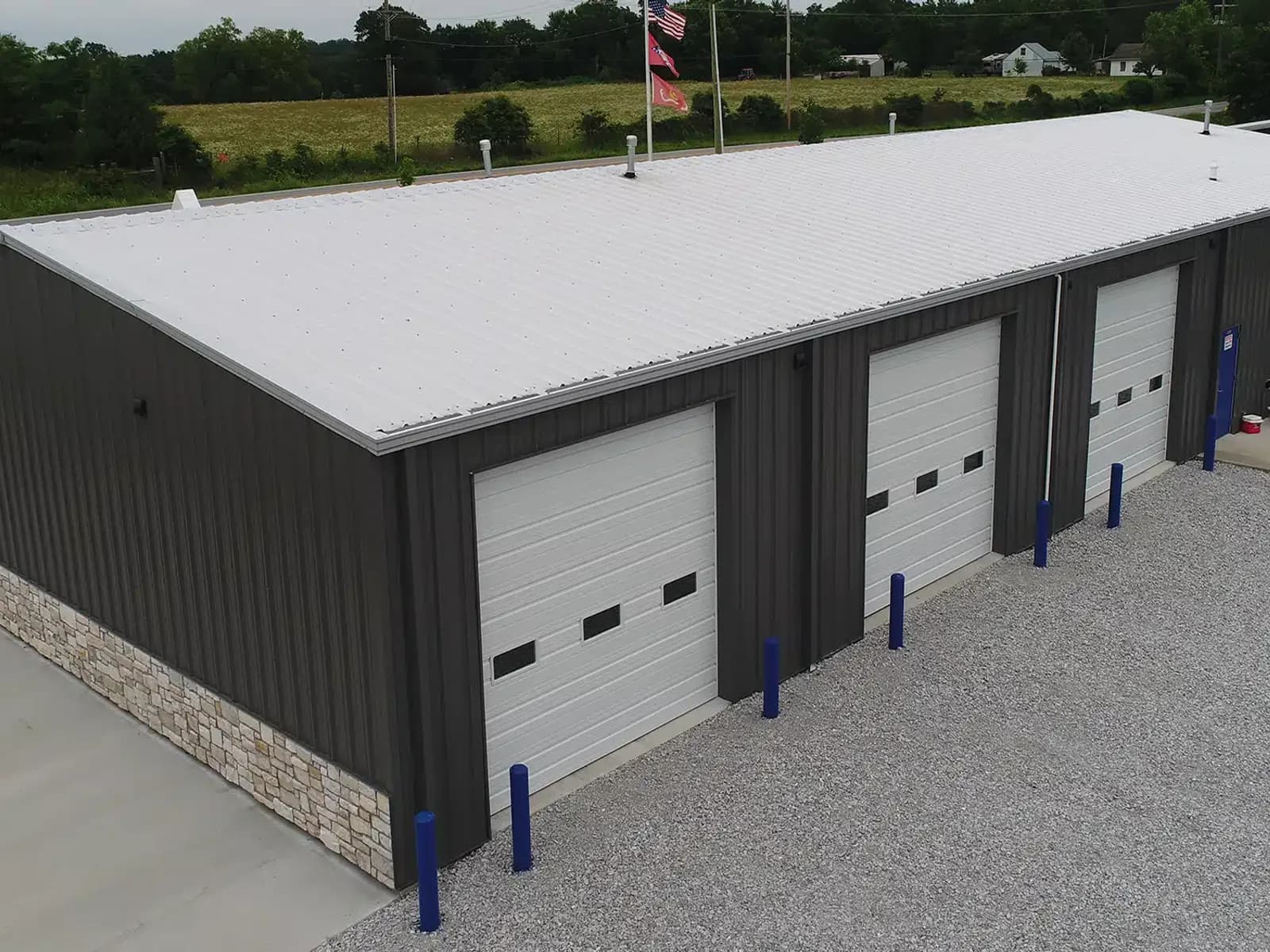
Metal Roofing
Standing seam, R-panel, PBR, and structural systems.
Learn more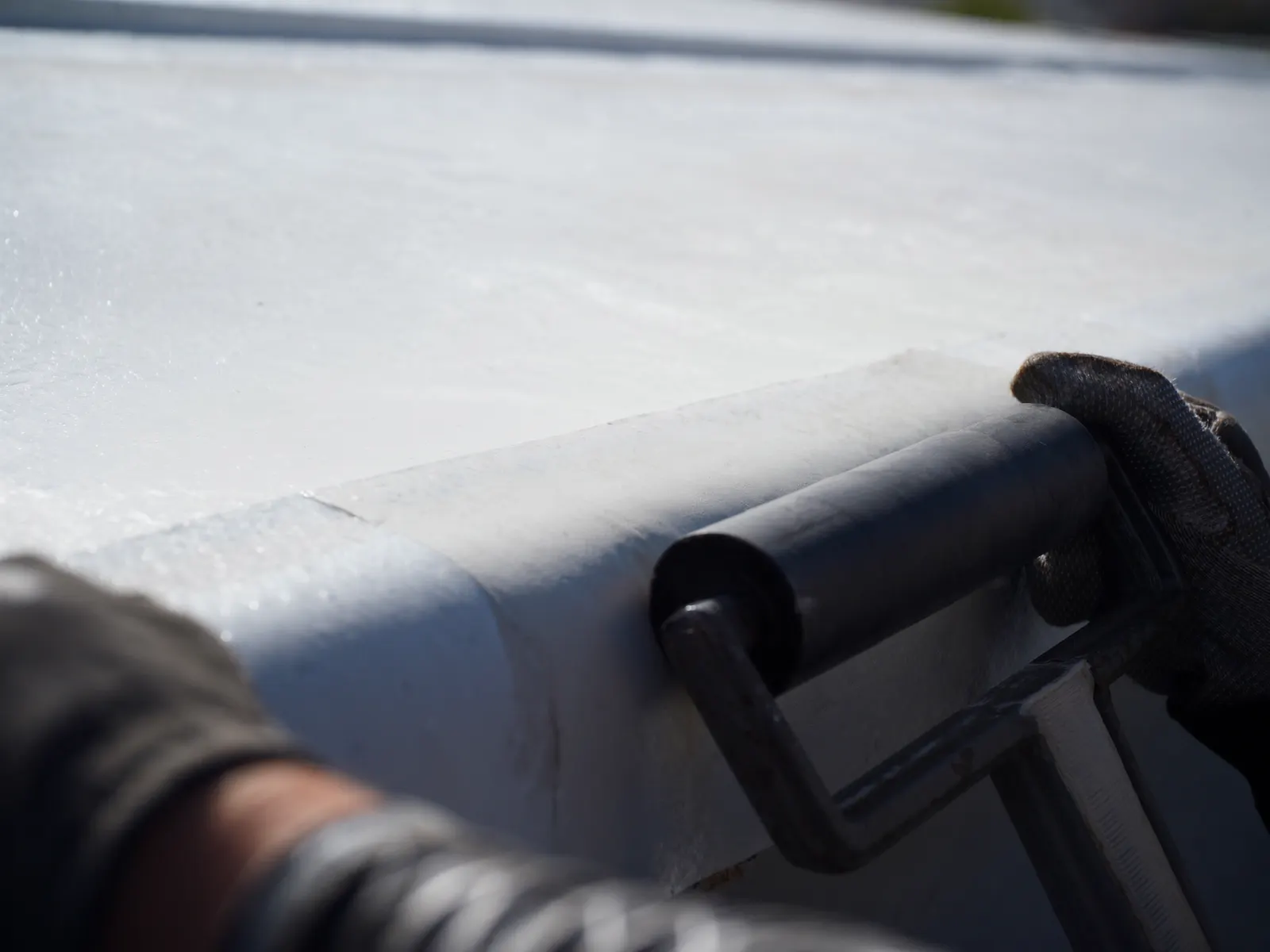
Roof Repair
Leaks traced, fixed, and documented: fast.
Learn more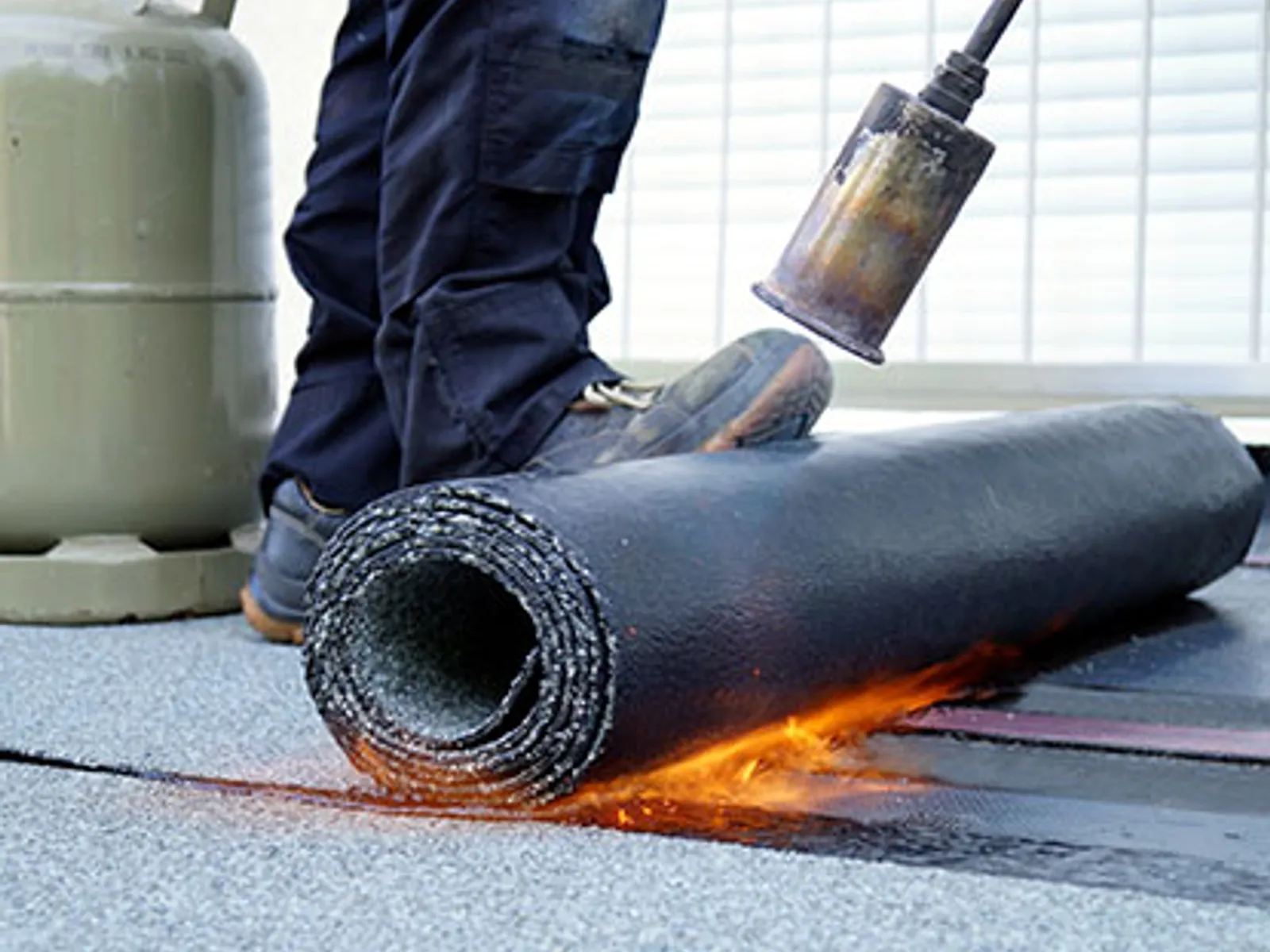
Roof Replacement
Capital projects run like capital projects.
Learn more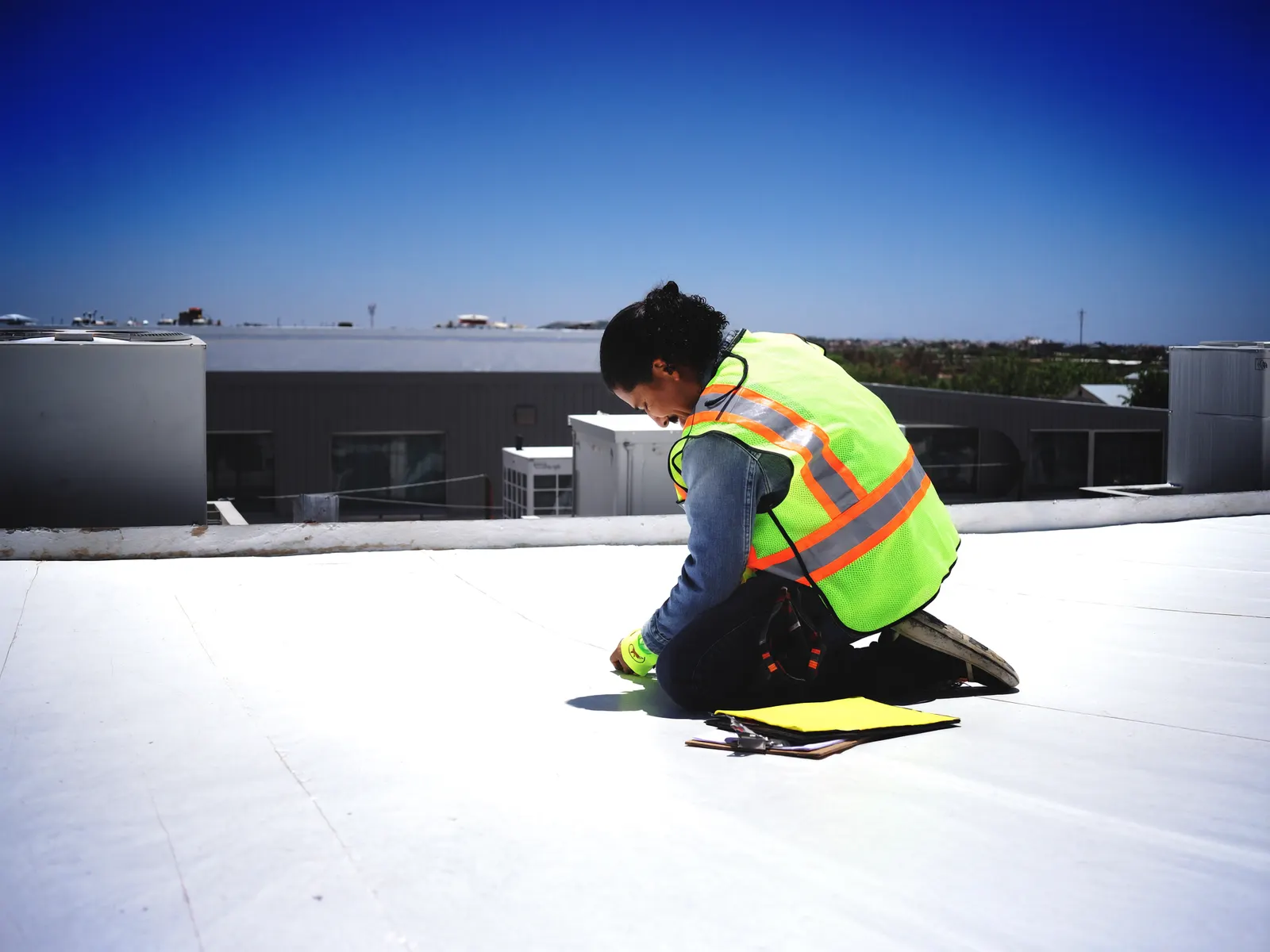
Roof Maintenance
Scheduled care that finds the small problems while they are still small.
Learn more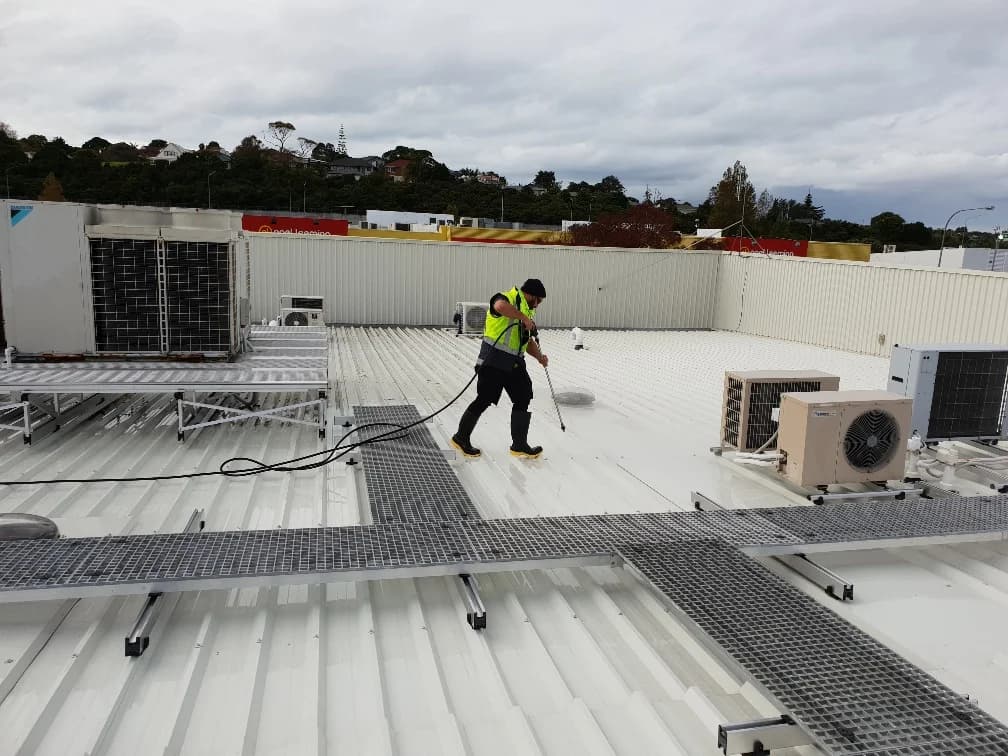
Roof Washing
Staining and growth removed, scoped by roof system and scheduled around operations.
Learn more
Industries we serve
Roofing that speaks your industry's language
Schedules, budgets, and constraints differ by building type. Our approach follows suit.
Our approach
How commercial projects run
Assessment & moisture data
Cores and condition mapping establish what's really up there before anything is proposed.
Engineered, itemized proposal
System options with specs and line-item pricing: written for boards, owners, and procurement.
Scheduling around operations
Staging, phasing, and noisy work planned with your team so the building keeps working.
Execution & documentation
Daily watertight closes, as-built records, and warranty registration at closeout.
Maintenance partnership
Scheduled inspections and reports that protect the investment for its whole life.
Choosing a commercial system: the honest selector
No single system wins every building. TPO's welded seams and reflectivity earn it the biggest share of new low-slope work; EPDM's large sheets suit big open roofs; PVC earns its premium where grease or chemicals would attack other membranes; modified bitumen brings multi-ply redundancy to high-traffic roofs; a coating can restore a roof that still qualifies; and metal spans the gap from architectural standing seam to structural panels over open purlins. The table below is how we frame the first conversation. The actual recommendation follows core samples and a moisture assessment, not a brochure.
| System | Seam method | Typical spec | Best fit | Primary strength | Main limitation | Relative cost |
|---|---|---|---|---|---|---|
| TPO | Hot-air welded | 45–80 mil (60 common) | Offices, retail, schools, most low-slope | Welded seams + reflectivity | Punctures near equipment without walk pads | Moderate initial investment |
| EPDM | Primer + seam tape | 45–90 mil (60 common) | Large open roofs, simple geometries | Big sheets, long track record, repairable | Standard black absorbs heat; grease attacks it | Moderate initial investment |
| PVC | Hot-air welded | ~50–80 mil | Restaurants, kitchens, some industrial | Resistance to grease and many chemicals | Compatibility must be verified per exposure | Higher initial investment |
| Modified bitumen | Multi-ply, adhered or welded | Base + cap sheet | High-traffic and service-heavy roofs | Redundant plies, tolerates foot traffic | More seams and laps to detail | Moderate initial investment |
| Roof coating | Fluid-applied | Silicone, acrylic, urethane | Sound, dry roofs that qualify | Restores without tear-off | Never a fix for wet insulation or bad decks | Lower initial investment |
| Standing seam metal | Concealed clips | Commonly 24 ga | Public-facing and steep-slope buildings | Concealed fasteners, long service life | Higher up-front; slope rules vary by profile | Higher initial investment |
| R-panel / PBR | Exposed fasteners | Commonly 26 ga | Shops, warehouses, metal buildings | Economical, spans open purlins (PBR) | Exposed washers need periodic inspection | Lower initial investment |
| Structural metal | Profile-dependent | Commonly 24–22 ga | PEMBs and no-deck buildings | Engineered span over open framing | Assembly is engineering-driven, not catalog-driven | Depends heavily on the existing assembly |
What a commercial roof decision actually involves
Before any system is proposed, the existing roof has to be understood: core samples establish the assembly and layer count, moisture scanning maps any wet insulation, and the deck gets identified, because a recover over a wet or failing assembly just buries the problem. Code limits on roof layers, insulation R-value, tapered drainage, cover boards, edge metal, and wind-uplift zones all get settled in the proposal stage, in writing, where a board or owner can compare options line by line.
The other half of commercial roofing is operational: staging that doesn't block your docks, phasing that keeps tenants and classrooms working, daily watertight tie-ins so an afternoon storm doesn't find an open roof, and closeout documentation: as-builts, warranty registration, and the manufacturer inspection where the selected warranty requires one. Buildings keep operating; the roof project has to fit around that, not the other way around.
FAQ
Commercial roofing questions, answered
Do you handle small commercial repairs or only big projects?
Which flat-roof system is best?
Can you work with our board's or municipality's approval process?
Do you offer maintenance contracts?
Let's talk about your roof
A consultation, not a sales pitch: we assess your building, your operations, and your budget cycle, then propose the system that actually fits.