
Residential roofing
Metal roofing for Mississippi homes
Decades of service life, serious wind performance, and clean modern lines, metal has earned its momentum in South Mississippi. We install standing seam and exposed-fastener systems in 26 and 29 gauge, matched honestly to your home and budget.
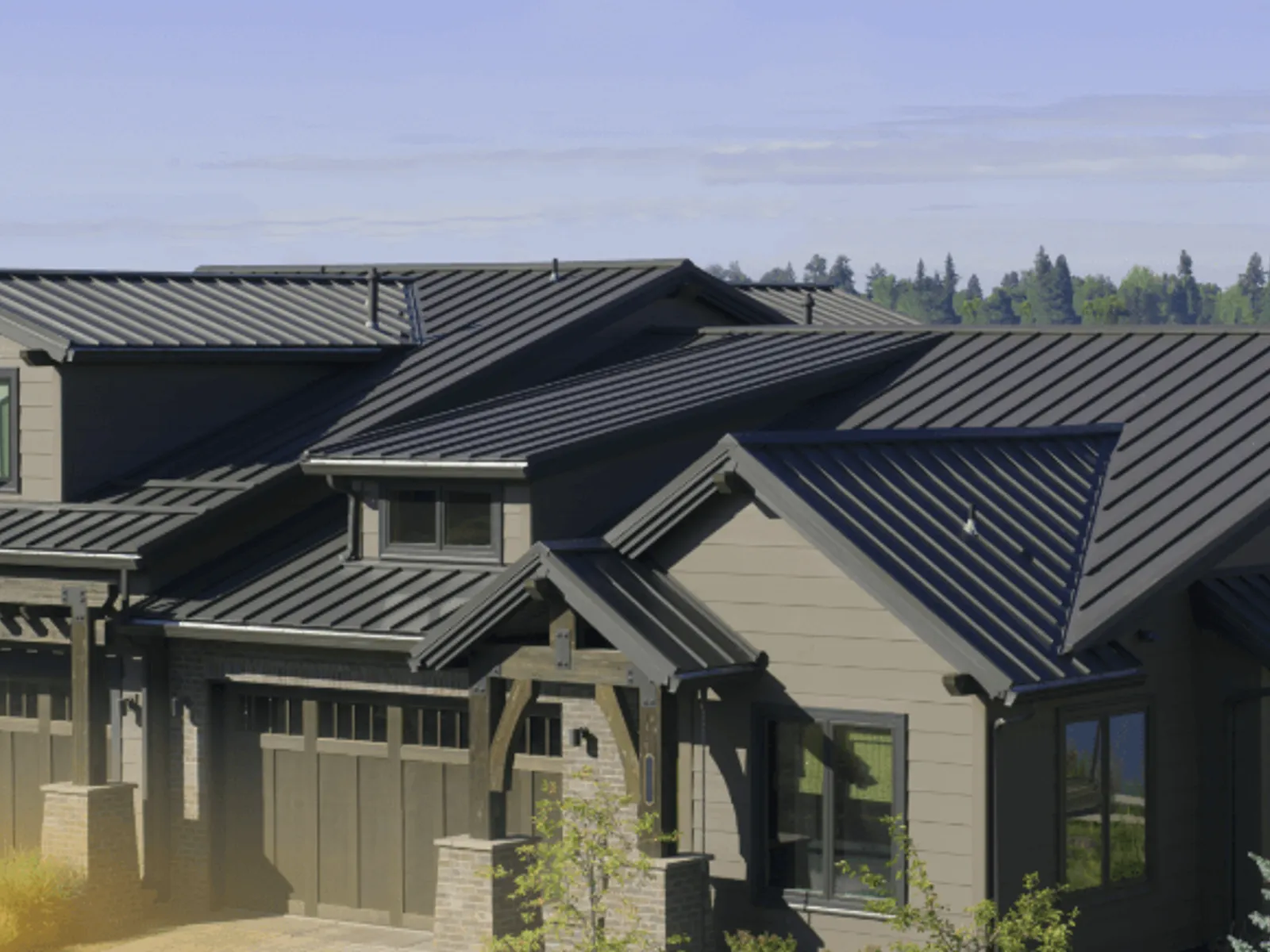
Why homeowners here are switching to metal
A metal roof costs more than shingles up front. We'll say that plainly. What you get for it is a roof that commonly outlasts two shingle roofs, sheds hurricane-season wind and rain exceptionally well, and reflects summer heat instead of absorbing it. Over the life of the home, the math often favors metal, especially if you plan to stay put.
Metal isn't a side business for us. It's a system we install across both our residential and commercial divisions, which means the crews on your home work with these panels regularly: seaming, flashing, and trim included. And because we install shingle systems too, our recommendation starts with your roof and your plans, not with a product we need to move.
Two system families cover nearly every home: standing seam, the premium concealed-fastener option, and exposed-fastener panels, the budget-friendly workhorse. Both come in 26 and 29 gauge steel and a wide range of colors.
Standing seam, exposed fastener, or shingles: side by side
Most homeowners narrow the decision to three systems: standing seam metal, exposed-fastener metal, and architectural shingles. The real question is which trade-offs fit your house, your budget, and how long you intend to own it, here is the short version, without the sales gloss.
The table summarizes; the two metal pages linked below carry the actual specifications, and our shingle page makes the case for asphalt honestly.
| Comparison point | Standing seam metal | Exposed-fastener metal | Architectural shingles |
|---|---|---|---|
| Attachment | Concealed clips or a hidden fastening flange: no screws through the panel field | Gasketed screws driven through the panel face into deck or framing | Nails covered by the course above |
| Typical gauge / material | Commonly 24 or 26 gauge steel (the lower number is thicker) | Commonly 26 or 29 gauge steel | Laminated fiberglass-asphalt mat |
| Appearance | Flat pans with crisp vertical seams | Ribbed profile with visible screw heads | Dimensional shingle texture |
| Maintenance | Flashings, sealants, and penetrations still need periodic checks | Same items plus the gasketed fasteners, which weather in the sun | Periodic inspection; individual shingles can be replaced |
| Slope limitations | Snap-lock profiles commonly need about 3:12; mechanically seamed profiles may be approved lower | Many profiles need about 3:12 without special detailing | 2:12 minimum with special underlayment; standard underlayment commonly from 4:12 |
| Initial investment | Higher initial investment | Moderate initial investment | Lower initial investment |
| Best-fit owner | Long-term owners who want the premium, lowest-upkeep metal option | Budget-minded owners; barndominiums, shops, barns, porches | Owners prioritizing initial cost or a neighborhood shingle look |
Gauge and finish: the two spec choices that follow
Steel gauge runs backwards from what most people expect: the lower the number, the thicker the metal, so 26 gauge is thicker than 29. Thicker panels are stiffer, resist hail denting better, and show less waviness in the flats; 29 gauge is lighter and more economical: a sensible choice for many outbuildings and budget-driven projects, and the 29-gauge Gibraltar Rib is one line we install regularly on area projects.
Finish is the other lasting decision. Bare Galvalume gives a classic silvery agricultural look; painted panels come in dozens of colors under two paint families: PVDF, the premium resin system that commonly holds color and gloss longer, especially in dark or vivid colors, and SMP (silicone-modified polyester), the economical standard that serves well in mid-range colors. Closer to the coast, salt exposure makes the paint system and the metallic coating underneath worth a deliberate conversation.
What sits under the panels matters as much as the panels
Houses are decked structures: metal goes down over solid sheathing with an underlayment rated for metal roofing, commonly a high-temperature synthetic, because panels run hotter than shingles on a July afternoon. Barns and pole structures are usually open-framed, with panels screwed straight to purlins and no deck at all, which changes the sound, condensation, and panel-choice picture.
Condensation deserves a plain mention. Metal sheds nighttime heat quickly, and on humid Mississippi mornings the underside of an open-framed panel can sweat; decked, underlaid homes manage this as part of the normal roof assembly, while open outbuildings may call for vapor-management measures.
Our approach
How a residential metal project works
Free inspection & honest comparison
We assess your roof and walk you through metal versus shingle for your specific home, including when shingle is genuinely the smarter buy.
System, gauge & color selection
Standing seam or exposed fastener, 26 or 29 gauge, and colors chosen from real samples: with the trade-offs of each explained plainly.
Precision installation
Panels cut to your roof's dimensions, correct underlayment for metal, and flashing details done right, metal is unforgiving of shortcuts.
Walkthrough & care guidance
We walk the finished roof with you and explain the modest maintenance a metal system actually needs.
Materials & options
Systems, gauges, and finishes
The choices that matter on a residential metal roof, in plain language.
Standing seam (concealed fastener)
Panels lock together over hidden clips, no screw heads exposed to the weather, and room for the metal to expand and contract. The premium choice.
Exposed-fastener panels
Panels screwed directly to the structure with gasketed fasteners. Significantly more affordable, with a clean ribbed look: the practical choice for many homes, shops, and barns.
26 gauge steel
The thicker of the two gauges we install, stiffer panels with better dent resistance in hail country. Our usual recommendation where budget allows.
29 gauge steel
Lighter and more economical: a legitimate choice for many applications, and we'll tell you honestly where it fits and where it doesn't.
Painted & bare finishes
Modern paint systems carry long fade-resistance and come in dozens of colors; bare Galvalume offers a classic agricultural look.
Trim & flashing package
Ridge, hip, eave, and gable trim formed to match, the details that separate a crisp metal roof from a leaky one.
Not sure which system fits? Start with standing seam vs. exposed fastener above, that one decision drives most of the cost and look.
What affects the cost of a residential metal roof?
System choice
Standing seam versus exposed fastener is the single largest driver, concealed-fastener panels cost more to manufacture and take more skilled labor to install.
Gauge and finish
26 gauge costs more than 29; PVDF paint systems cost more than SMP. Both are worth weighing against how long you'll own the home.
Roof complexity
Hips, valleys, dormers, and chimneys multiply the trim and flashing work: the most skill-intensive part of any metal installation.
Tear-off and decking condition
Removing the old roof and repairing any soft or damaged sheathing is priced from what the inspection finds, not guessed.
Trim and flashing package
Ridge, hip, eave, gable, and penetration trim formed to match the panels, a bigger share of a metal quote than most homeowners expect.
Access and panel logistics
Long panels, steep pitches, and tight lots change how material is staged and handled, and that shows up in labor.
Storm damage? We speak insurance.
Thorough documentation, reports in the format adjusters expect, and someone on your side at the adjuster meeting.
How claim assistance works$0 down financing available
Apply through our partner GoodLeap in minutes and see the plans you qualify for, decide with real numbers in hand.
Explore financing optionsLifetime warranty
Manufacturer limited-lifetime warranty options are available on qualifying roofing systems. Ask what applies to your roof at your free inspection.
Start with a free inspectionFAQ
Residential Metal Roofing questions, answered
How long does a metal roof last compared to shingles?
Is a metal roof loud when it rains?
Does metal roofing help with insurance or energy bills?
Can a metal roof be installed over my existing shingles?
Standing seam or exposed fastener, how do I choose?
Do you install metal on barndominiums, shops, and barns?
Will hail dent a metal roof?
Related services
You may also need
Standing Seam Metal Roofing
The premium concealed-fastener system, how it works and when it's worth it.
Learn moreExposed-Fastener Metal Roofing
The cost-effective panel system that puts metal within reach.
Learn moreAsphalt Shingle Roofing
Comparing honestly? Here's what our shingle systems offer.
Learn more
Service area
Where we provide residential metal roofing
Based in Hattiesburg and serving Mississippi within about two hours, from the Pine Belt to the Gulf Coast.
- Purvis
- Sumrall
- Seminary
- Collins
- Ellisville
- Richton
- Waynesboro
- Leakesville
- Columbia
- Poplarville
- Wiggins
- Perkinston
- Lucedale
- Kiln
- McHenry
- Saucier
- Diamondhead
- Bay St. Louis
- Pass Christian
- Long Beach
- D'Iberville
- Ocean Springs
- Moss Point
- Pascagoula
- Crystal Springs
- Jackson
- Meridian
Don't see your town? If you're within about two hours of Hattiesburg, we most likely serve you.
Ready for a roof you don't have to think about?
Schedule a free inspection or get an instant estimate right now. $0 down financing available through GoodLeap.