
Residential metal roofing
Standing Seam Metal Roofing for Mississippi Homes
Standing seam: the concealed-fastener standard
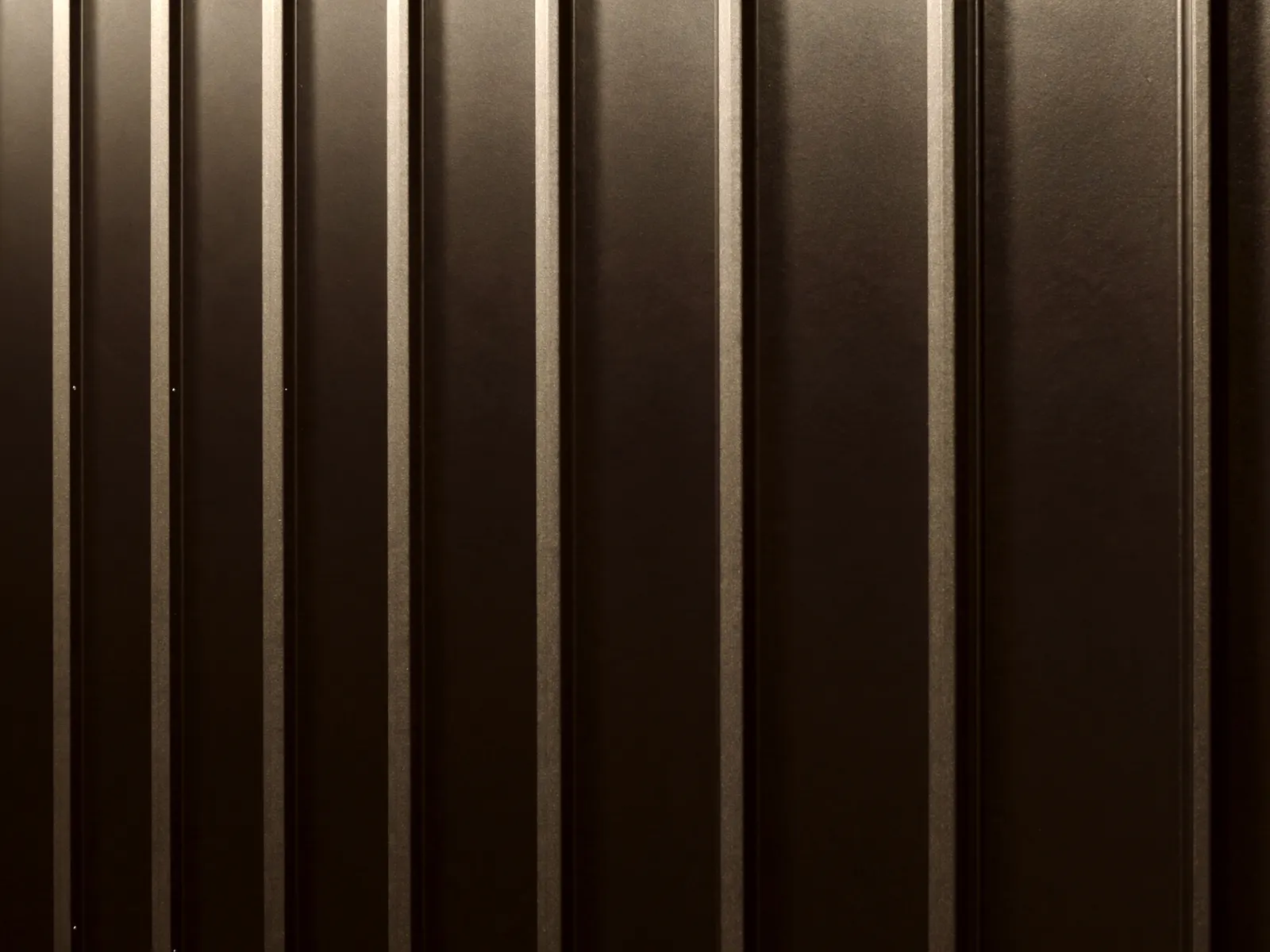
Vertical panels, crisp raised seams, and not a single exposed screw on the field of the roof. Standing seam is the system metal's reputation is built on, and on a South Mississippi home, it's built for the weather that's coming.
What makes standing seam different
Every roof system has a weak point, and on most it's the fasteners, thousands of penetrations, each sealed by a gasket that ages in the sun. Standing seam removes that weakness from the field of the roof entirely: panels attach with concealed clips, and adjacent panels lock together at raised seams that stand above the water line.
The clip attachment does something else clever. It lets each panel expand and contract with temperature swings without stressing the fasteners. In a climate that goes from 95-degree afternoons to cool storm fronts, that freedom of movement is a quiet, decades-long advantage.
The result is the residential roof with the fewest maintenance points we install: no screw heads on the panel field to re-tighten or gaskets to weather. Flashings, penetrations, and sealants still deserve a periodic look, but the list is short.
When standing seam is the right call
This is your long-term home
The longer you'll own the house, the more standing seam's service life pays you back.
You want serious storm resilience
Interlocked seams and concealed clips give standing seam outstanding wind performance for hurricane season.
You want the shortest maintenance list
No exposed fasteners on the panel field: flashings and penetrations still deserve a periodic look, but the list is short.
Cooling bills matter
Reflective painted finishes shed summer heat that dark shingles absorb.
The architecture suits it
Modern, farmhouse, and coastal styles all wear standing seam's vertical lines beautifully.
You value resale confidence
A premium metal roof is a selling point buyers can see from the street.
Residential standing seam at a glance
The numbers that define a residential standing seam roof, as a representative planning sheet. The approval documents for the specific panel we spec for your home govern the installation.
| Specification | Representative range |
|---|---|
| Steel gauge | Commonly 24 or 26 gauge (24 is the thicker of the two) |
| Pan width | Typically about 12–18 inches; 16-inch panels are common on homes |
| Seam height | Commonly about 1.5–2 inches |
| Attachment | Concealed clips, or a concealed fastening flange on snap-lock 'nail strip' panels |
| Minimum slope | Snap-lock profiles commonly require around 3:12; mechanically seamed profiles may be approved for lower slopes |
| Substrate | Continuous solid deck with an underlayment rated for metal roofing |
Clips or fastening flange: two ways to hide the screws
Concealed fastening comes in two flavors. Clip-attached panels float over separate clips screwed to the deck; the clip grips the seam while letting the panel slide as it expands and contracts. Fastening-flange panels, often called nail-strip profiles: screw directly through a hidden flange along one panel edge, with slotted holes providing a more limited allowance for movement.
Both keep every screw out of the weather; on long, unbroken eave-to-ridge runs we lean toward clips, because controlled thermal movement matters more as panels get longer. It's a spec decision made from your roof's dimensions, not a default.
Snap-lock vs. mechanically seamed
Snap-lock panels have seams that press together by hand, one panel's leg snaps over its neighbor's. They're the common residential choice, and they commonly require a slope of around 3:12 or steeper because the snapped seam, while weathertight, isn't folded shut.
Mechanically seamed panels get their seams rolled closed by a powered seaming tool after installation, folding the two panel edges into each other, often with sealant inside the fold. That tighter closure is why mechanically seamed profiles may be approved for lower slopes than snap-lock, subject to the manufacturer's requirements. If part of your roof runs shallow, this distinction decides which panel goes there. It's never safe to assume every standing seam profile handles every slope.
Panel width and oil canning, explained honestly
Oil canning is the visible waviness that can appear in the flat area of a metal panel, light reflecting off slight ripples in the steel. It's cosmetic, not a structural failure, and some degree of it is inherent to light-gauge flat metal; no installer can promise to eliminate it.
You can stack the odds in your favor, though. Narrower pans show less waviness than wide ones; thicker steel shows less than thin; light colors show less than dark; and striations or ribs pressed into the pan break up the reflection. Substrate irregularities and installation stresses play a role too, which is why deck prep matters.
Deck, underlayment, and the flashing details that decide it
Residential standing seam is an architectural system: it installs over a continuous solid deck, not open framing. We inspect and repair the sheathing at tear-off, then run an underlayment rated for metal: commonly a high-temperature synthetic, since panels run hotter than standard shingle underlayments are rated for.
Then comes the part that actually separates installers: flashing. Chimneys get formed metal counterflashing let into the masonry; sidewalls get flashing tucked behind the cladding, not surface-caulked; valleys get wide open-valley metal with panel edges hemmed and held clear of the waterway; pipes get boots detailed for panel movement. The details are where a standing seam roof's quality lives.
How standing seam compares to your other options
Against exposed-fastener metal, the trade is straightforward: standing seam costs more and removes the field fasteners, the component that needs attention as any screw-down roof ages. Long-horizon owners tend to land on standing seam; budget-focused projects and outbuildings on exposed fastener.
Against architectural shingles, it's a different investment class: higher initial investment, longer expected service, better low-slope performance, and a distinctly different look. Shingles remain the right answer for plenty of homes, and because we install both, the comparison you get from us is priced, not theoretical.
Our approach
How we install standing seam
Measure and spec
Panels are made to your roof's exact dimensions. We measure precisely and spec gauge, profile, and color with you.
Tear-off and deck prep
Old roofing comes off, decking gets inspected and repaired, and underlayment rated for metal goes down.
Panel and seam installation
Panels lock over concealed clips, seams are formed tight, and every termination is detailed for weather.
Trim, flashing & walkthrough
Matching ridge, eave, and gable trim finish the system, then we walk the completed roof with you.
What we evaluate before pricing a standing seam roof
Profile and seam type
Snap-lock versus mechanically seamed changes both material and labor, seaming machines and slope requirements are part of the spec.
Gauge and pan width
24 gauge costs more than 26; narrower pans mean more seams across the same roof, which adds material and installation time.
Finish system
PVDF paint finishes carry a premium over SMP, with better long-term color hold: a fair trade to weigh on a decades-long roof.
Roof geometry
Hips, valleys, dormers, chimneys, and skylights each add formed flashing work: the most labor-intensive part of standing seam.
Tear-off and deck repair
The existing roof comes off, the sheathing gets repaired where needed, and metal-rated underlayment goes down. The inspection sets this line.
Panel length and access
Long eave-to-ridge runs, steep pitches, and tight sites change staging, handling, and crew time.
Storm damage? We speak insurance.
Thorough documentation, reports in the format adjusters expect, and someone on your side at the adjuster meeting.
How claim assistance works$0 down financing available
Apply through our partner GoodLeap in minutes and see the plans you qualify for, decide with real numbers in hand.
Explore financing optionsLifetime warranty
Manufacturer limited-lifetime warranty options are available on qualifying roofing systems. Ask what applies to your roof at your free inspection.
Start with a free inspectionFAQ
Standing Seam Metal Roofing questions, answered
Why does standing seam cost more than other metal roofing?
How does standing seam handle hurricanes and high wind?
What roof pitch does standing seam need?
What maintenance does a standing seam roof need?
What is oil canning, and will my roof have it?
Related services
You may also need
Exposed-Fastener Metal Roofing
The budget-friendlier alternative, see how the two systems compare.
Learn moreResidential Metal Roofing
The full residential metal picture: systems, gauges, colors, and value.
Learn moreRoof Replacement
What the replacement process looks like from tear-off to walkthrough.
Learn more
Service area
Where we provide standing seam metal roofing
Based in Hattiesburg and serving Mississippi within about two hours, from the Pine Belt to the Gulf Coast.
- Purvis
- Sumrall
- Seminary
- Collins
- Ellisville
- Richton
- Waynesboro
- Leakesville
- Columbia
- Poplarville
- Wiggins
- Perkinston
- Lucedale
- Kiln
- McHenry
- Saucier
- Diamondhead
- Bay St. Louis
- Pass Christian
- Long Beach
- D'Iberville
- Ocean Springs
- Moss Point
- Pascagoula
- Crystal Springs
- Jackson
- Meridian
Don't see your town? If you're within about two hours of Hattiesburg, we most likely serve you.
Ready for a roof you don't have to think about?
Schedule a free inspection or get an instant estimate right now. $0 down financing available through GoodLeap.