
Residential roofing
Roof Repair in Hattiesburg, MS
Repairs that fix the cause, not just the drip
Water is sneaky. Where it shows up inside is rarely where it got in. We trace leaks to their true source, repair them properly, and tell you honestly when a repair is all your roof needs.
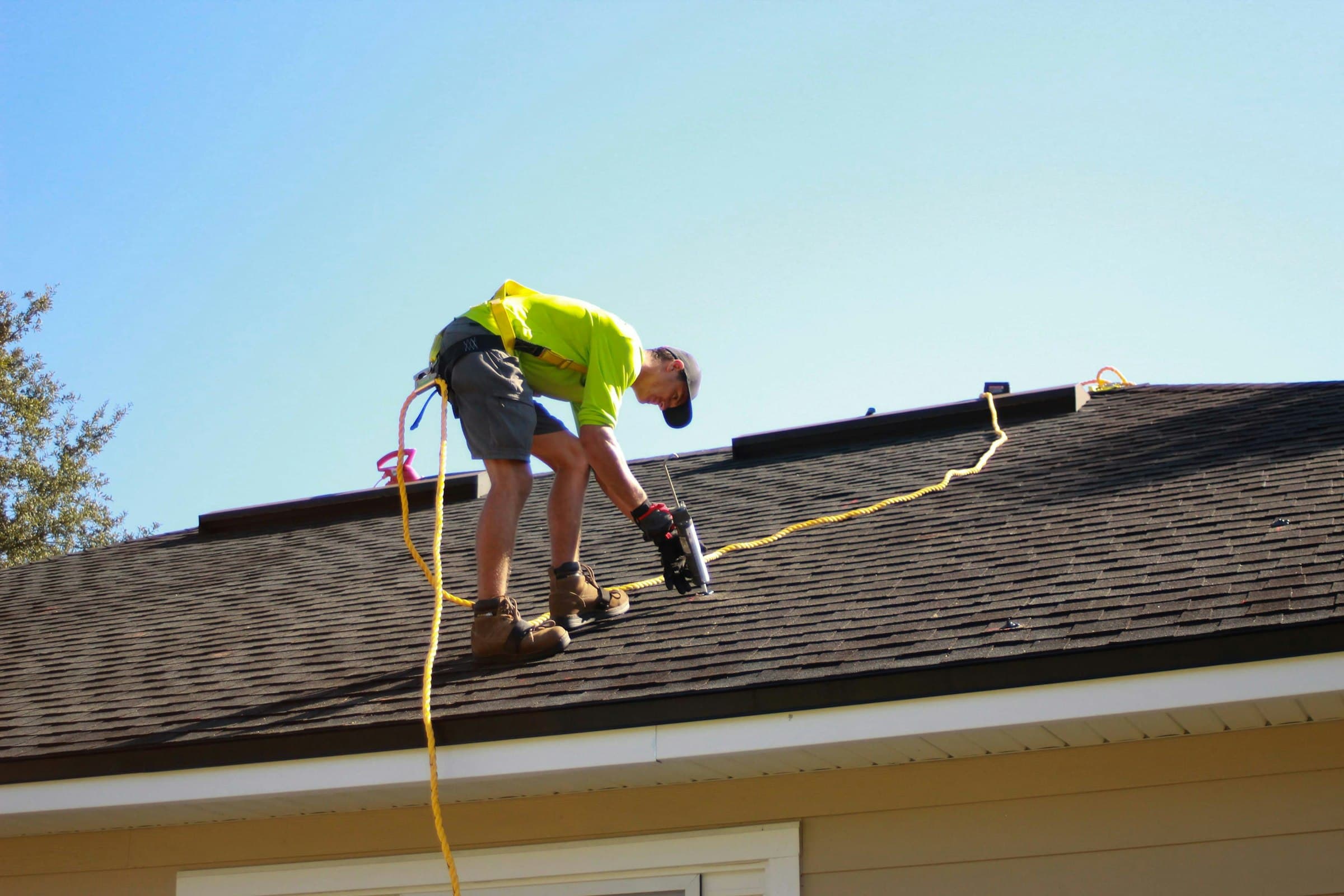 Shingle repair work
A good repair starts with a real diagnosis
South Mississippi roofs take a beating in short bursts: an afternoon thunderstorm with straight-line winds, a hail cell, a branch down in a tropical system. The damage is often local: a run of missing shingles, torn flashing around a chimney, a punctured valley. Caught early, these are modest repairs. Left alone through a wet season, they become decking rot, insulation damage, and interior stains.
Our repair visits start the same way as everything we do: an inspection that documents what's actually wrong. Then we fix the source, matching materials to your existing roof as closely as supply allows, and show you photos of the finished work. And if what we find genuinely calls for replacement instead, we'll show you why and let the evidence speak.
Signs you need a roof repair now
Water stains or drips inside
Ceiling spots, wet attic insulation, or drips during rain. The leak is established and growing.
Shingles in the yard
After any wind event, shingles on the ground mean open spots on the roof.
Hail strikes
Bruised shingles and dented vents after hail may not leak yet, but they will, and they're time-sensitive for insurance.
Damaged flashing
Rusted, lifted, or missing flashing around chimneys, walls, and valleys is the most common leak source we find.
Tree contact
A limb strike, even one that 'just brushed' the roof, can crack shingles and puncture underlayment.
Cracked seals and boots
The rubber boots around pipes and vents dry out in our heat and split years before the shingles fail.
The usual suspects: where leaks actually start
The shingle field itself is rarely the problem. It's the details where materials meet, age, or move:
- Pipe boots: the rubber collars split in our heat, often years before the shingles fail
- Chimney flashing: failed base, counter, or cricket flashing
- Sidewall and headwall flashing: where a roof plane dies into a wall
- Valleys, concentrated flow finds any puncture, nail, or worn spot
- Missing or wind-creased shingles. A creased shingle can leak even while still on the roof
- Nail pops: backed-out nails that tent the shingle above
- Skylights and satellite-mount penetrations
- Ridge caps and exposed accessory fasteners
- Transitions to low-slope porch or addition roofs, where a shingle assembly runs out of slope
- Clogged gutters and rotted fascia backing water up under the roof edge
- Attic condensation, moisture that mimics a leak but comes from inside the house
Why the ceiling stain isn't the leak
Water almost never drops straight down from its entry point: it rides the decking, follows a rafter, tracks the underlayment, and lets go at a seam or low spot, often many feet from where it got in. That's why chasing a leak from the stain alone fails, and why the same stain comes back after fixes that patched the wrong spot.
Our diagnosis works from both sides: the details upslope of the stain on the roof, and the water trail on decking and framing in the attic, including telling true leaks from condensation, which needs an airflow fix, not a roofing one. We photograph before and after.
Tarps, sealant, and what counts as a permanent repair
A tarp is triage, not treatment: it stops active damage and buys time, that's what our emergency line is for. But a tarp left on for months does its own damage, so it always comes with a plan for the permanent repair behind it.
The same goes for sealant. A bead over a split boot or lifted flashing reads as "fixed" for a season or two, then fails, sealant alone is a temporary measure in most applications. A permanent repair replaces the failed component: a new boot, new step flashing, shingles woven into the field, decking swapped where it's soft.
Repair or replace: a decision aid
Roof area alone can't answer this, a small roof with widespread failure needs replacing; a large roof with one bad boot needs a repair. What matters is the pattern of failure and how much sound life remains around it:
| What we find | Usual call | Why |
|---|---|---|
| One failed detail (boot, flashing, a few shingles) | Repair | The surrounding roof has life left; fix the component |
| Wind or hail damage confined to part of the roof | Repair: often with an insurance claim | Commonly a covered peril; we document it either way |
| Shingles too brittle to lift without cracking | Replacement conversation | Repairs need shingles to flex; brittle fields break faster than they mend |
| Leaks recurring in multiple rooms or slopes | Replacement conversation | Patching system-wide failure costs more over a few seasons |
| Second or third repair call in a couple of years | Replacement conversation | Recurring repairs are usually the system telling you it's done |
| Newer roof with one botched detail | Repair | Fix the detail, keep the roof |
The honest limits of a repair
Two things we'd rather you hear up front. First, brittleness: repairs require lifting the surrounding shingles, and heat-aged shingles can crack when lifted: on a brittle field a small repair can grow, and we'll warn you before we start.
Second, color: shingles weather and manufacturers retire colors. We match as closely as supply allows, but a fresh patch on an older field may read slightly different at first, fading toward the rest over time.
Our approach
How we handle repairs
Inspect and trace
We find where water is actually entering, not just where it shows, and document it with photos.
Stabilize if needed
If weather is incoming or the opening is active, we tarp and protect first, then schedule the permanent fix.
Repair the source
Shingles, flashing, boots, valleys, or decking: repaired with materials matched to your roof.
Show our work
You get photos of the completed repair and a straight answer on the rest of the roof's condition.
What we evaluate before quoting a repair
Repairs can't be priced by roof size. A small fix on a steep two-story roof can involve more than a bigger one on a walkable ranch.
Diagnostic time
Tracing water to its true entry point is the part that makes the repair stick.
Access and pitch
Steep slopes, second stories, and tight access change safety setup and time.
Material compatibility
Matching your shingle line and color, or fabricating flashing to fit the detail.
Size of the affected area
A few shingles is one scope; a wind-stripped slope section is another.
Flashing fabrication
Chimneys and wall transitions often need custom-bent metal.
Decking and interior damage
Long-running leaks can rot decking below the surface repair.
Emergency timing
After-hours tarping mobilizes differently than a scheduled visit.
Number of trips
Some repairs need a stabilization visit plus a follow-up with matched materials.
Real projects
The damage we repair every week
Real inspection photos from South Mississippi roofs: wind, hail, tree, and storm damage.
Storm damage? We speak insurance.
Thorough documentation, reports in the format adjusters expect, and someone on your side at the adjuster meeting.
How claim assistance works$0 down financing available
Apply through our partner GoodLeap in minutes and see the plans you qualify for, decide with real numbers in hand.
Explore financing optionsLifetime warranty
Manufacturer limited-lifetime warranty options are available on qualifying roofing systems. Ask what applies to your roof at your free inspection.
Start with a free inspectionFAQ
Roof Repair questions, answered
How do I know if I need a repair or a full replacement?
Can you match my existing shingles?
My roof is leaking right now. What should I do?
Is storm damage repair covered by insurance?
Do you repair roofs you didn't install?
Why does my roof only leak in certain storms?
My roof is only a few years old. Can it really be leaking?
Related services
You may also need
Emergency Roofing
Active leak or storm opening? Tarping and rapid response come first.
Learn moreStorm Damage
Hail, wind, and hurricane-season damage: how the response and claim process works.
Learn moreRoof Replacement
When repairs stop making sense, here's what a straightforward replacement looks like.
Learn more
Service area
Where we provide roof repair
Based in Hattiesburg and serving Mississippi within about two hours, from the Pine Belt to the Gulf Coast.
- Purvis
- Sumrall
- Seminary
- Collins
- Ellisville
- Richton
- Waynesboro
- Leakesville
- Columbia
- Poplarville
- Wiggins
- Perkinston
- Lucedale
- Kiln
- McHenry
- Saucier
- Diamondhead
- Bay St. Louis
- Pass Christian
- Long Beach
- D'Iberville
- Ocean Springs
- Moss Point
- Pascagoula
- Crystal Springs
- Jackson
- Meridian
Don't see your town? If you're within about two hours of Hattiesburg, we most likely serve you.
Ready for a roof you don't have to think about?
Schedule a free inspection or get an instant estimate right now. $0 down financing available through GoodLeap.