
Storm damage
Emergency Roof Repair in Hattiesburg, MS
Roof open right now? Start here.
When a storm puts a hole in your roof, the clock is running on everything under it. We respond fast across the Hattiesburg region with professional tarping and mitigation, then get you on the documented path to a permanent repair.
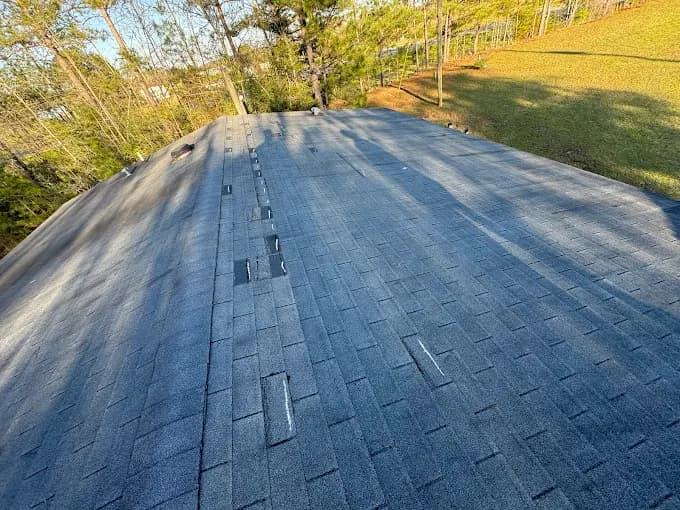 Emergency tarping: South Mississippi
First we stop the damage. Then we fix the roof.
Emergency roofing is triage: the goal in the first hours is to stop water from multiplying the damage. A professionally installed tarp or temporary patch protects your decking, insulation, wiring, and ceilings until weather and materials allow the permanent repair, and it's exactly the kind of 'reasonable mitigation' your insurance policy expects you to arrange after a loss.
We photograph everything before and during the emergency work. That documentation matters twice: it gets the mitigation itself into your claim, and it preserves evidence of the storm damage before tarps cover it.
One honest note: during a major regional storm event, every roofer in South Mississippi is triaging calls at once. We work in order of severity and stay reachable, call us early, tell us what you see, and we'll be straight with you about timing.
Our approach
How our emergency response works
Call and describe what you see
Active drips, visible holes, missing shingles, tree contact, what you tell us sets the urgency and what we bring.
Rapid assessment on site
We find every opening, including ones you can't see from the ground, and photograph the damage before covering it.
Professional tarping & mitigation
Reinforced tarps anchored correctly, temporary patches where they're smarter, and water paths stopped.
The permanent plan
You get our damage documentation, a clear repair or replacement recommendation, and claim support if insurance applies.
What to do right now
Before any roofer arrives, yours to run through, in this order.
- Keep people out of rooms with sagging or waterlogged ceilings: safety first, always.
- Contain the water: buckets under drips, towels at spread edges, furniture and electronics moved clear.
- If a ceiling is bulging with trapped water, poke a small drain hole with a screwdriver over a bucket: controlled draining beats a collapse.
- Photograph everything as you find it: interior damage, the yard debris, the roof from the ground. Don't climb up.
- Kill power to circuits where water is reaching fixtures or outlets.
- Call us. We'll talk through what you're seeing and get emergency tarping scheduled.
- Report the loss to your insurance company; mitigation costs like tarping are typically part of the claim, so keep every receipt.
Real projects
Emergency mitigation in the field
Real Southeast Roofing emergency calls across South Mississippi.
Storm damage? We speak insurance.
Thorough documentation, reports in the format adjusters expect, and someone on your side at the adjuster meeting.
How claim assistance works$0 down financing available
Apply through our partner GoodLeap in minutes and see the plans you qualify for, decide with real numbers in hand.
Explore financing optionsLifetime warranty
Manufacturer limited-lifetime warranty options are available on qualifying roofing systems. Ask what applies to your roof at your free inspection.
Start with a free inspectionFAQ
Emergency Roofing questions, answered
How fast can you get to my house?
Will insurance pay for emergency tarping?
Can't I just tarp it myself?
How long can a tarp stay on?
What if the damage is from a tree still on the roof?
Related services
You may also need
Storm Damage
The full picture: damage types, our response process, and what comes after the tarp.
Learn moreInsurance Claims
How we document damage and support your claim from first photo to final invoice.
Learn moreRoof Repair
The permanent fix that follows the emergency: traced to the source and done right.
Learn more
Service area
Where we provide emergency roofing
Based in Hattiesburg and serving Mississippi within about two hours, from the Pine Belt to the Gulf Coast.
- Purvis
- Sumrall
- Seminary
- Collins
- Ellisville
- Richton
- Waynesboro
- Leakesville
- Columbia
- Poplarville
- Wiggins
- Perkinston
- Lucedale
- Kiln
- McHenry
- Saucier
- Diamondhead
- Bay St. Louis
- Pass Christian
- Long Beach
- D'Iberville
- Ocean Springs
- Moss Point
- Pascagoula
- Crystal Springs
- Jackson
- Meridian
Don't see your town? If you're within about two hours of Hattiesburg, we most likely serve you.
Ready for a roof you don't have to think about?
Schedule a free inspection or get an instant estimate right now. $0 down financing available through GoodLeap.