
Storm damage
Roof Insurance Claims in Hattiesburg, MS
We speak insurance, so you don't have to learn it
A storm claim is paperwork stapled to a roof. We handle the roof and the documentation: thorough inspection reports, photos in the format adjusters expect, and someone on your side of the table at the adjuster meeting.
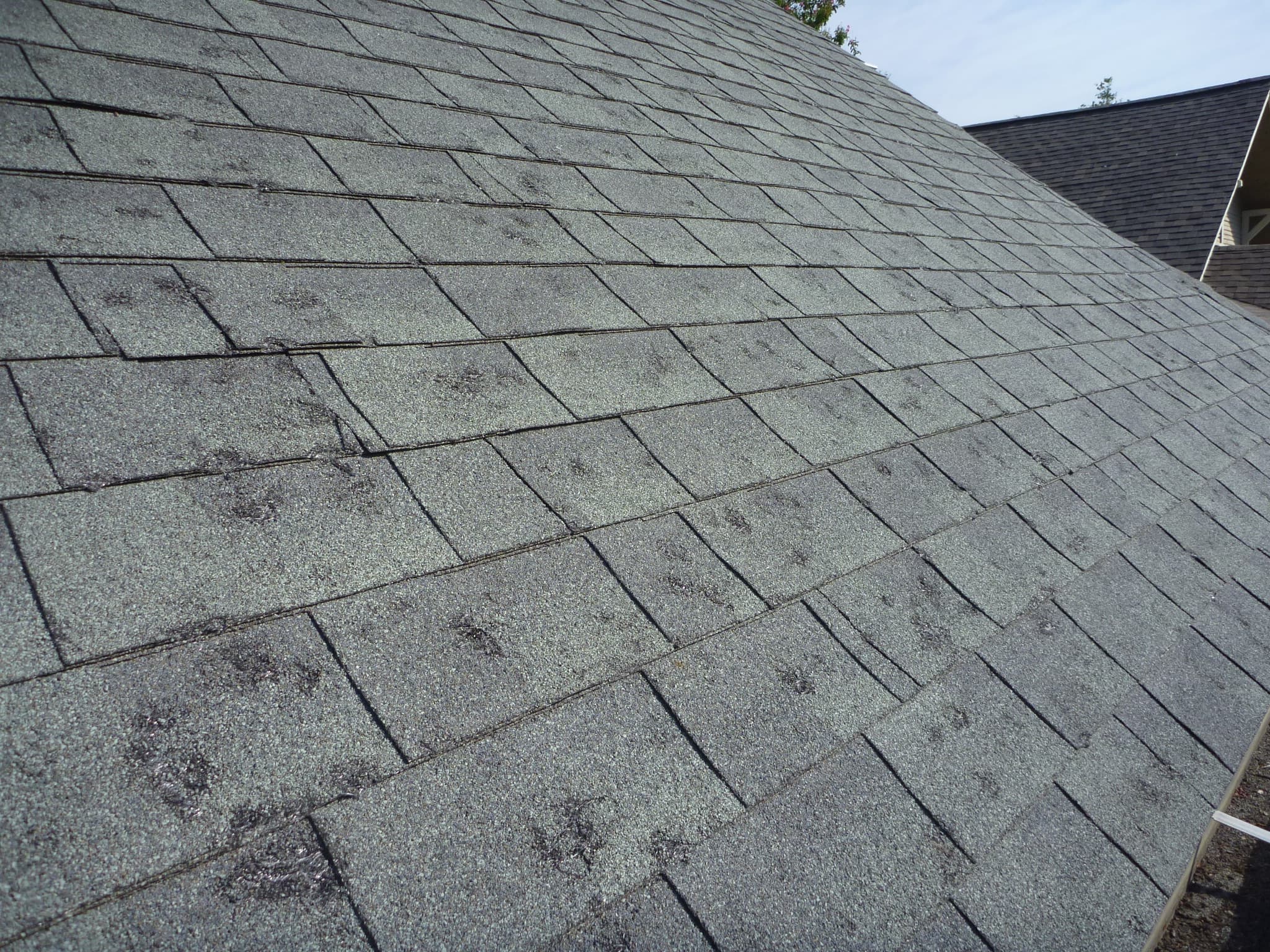 Hail damage documentation
What we do, and what we honestly can't
Here's the truth about roof claims: the decision belongs to your insurance company, and any roofer who guarantees your claim will be approved is selling something. What a good contractor actually does is make sure the damage is found, documented, and presented so the insurer can evaluate it fairly, and that nothing gets missed because nobody competent climbed the roof.
That's the job we do constantly across South Mississippi. Hail bruising that's invisible from the ground, wind creasing that hasn't started leaking yet, soft metal damage on vents and flashing that corroborates the storm: we photograph and report all of it, and we'll meet your adjuster on your roof to walk the evidence together.
From first inspection to final invoice, you'll know what step you're on and who owes what to whom. No mystery, no pressure, and no outcome promises: just the process done right.
Who does what in a roof insurance claim
A storm claim has four parties, and knowing each one's job keeps the process from feeling like a maze. You, the policyholder, own the claim: you file it, you make the decisions, and the policy is a contract between you and your insurer. The insurance company decides what is and isn't covered, not us, and not any contractor. The adjuster inspects on the insurer's behalf and contributes the scope of loss, which is the insurer's written list of the work it agrees the covered damage requires. Our job as the contractor is the physical evidence and the build: we document the roof's actual condition, prepare a proposal for the repairs, and complete the approved work.
One thing worth saying plainly: this page is general information about how the process typically works. It is not legal advice, and it is not an interpretation of your policy, your policy language and your insurer's decisions control. When a coverage question matters, the answers come from your policy, your agent, or your insurer.
The terms on your claim paperwork, translated
Claim documents use a vocabulary most people meet exactly once, usually while standing in a driveway looking at a damaged roof. Here are the terms that show up on nearly every roof claim, in plain English. Your policy's own definitions govern; these are the general meanings.
| Term | What it means |
|---|---|
| ACV | Actual Cash Value, the depreciated value of the roof at the time of loss: replacement cost minus depreciation for age and wear. |
| RCV | Replacement Cost Value, what it costs to replace the damaged roof with materials of similar kind and quality today, before depreciation is subtracted. |
| Deductible | The portion of a covered loss you are responsible for by contract. It is always the policyholder's to pay, no honest contractor offers to absorb it. |
| Depreciation | The value the roof lost to age and wear. Under many RCV policies it is recoverable: released after the work is completed and documented; under ACV policies it typically is not. |
| Supplement | A documented request to adjust the scope when covered conditions turn up that the original scope missed: rotten decking found at tear-off, for example. |
| Scope of loss | The insurer's written, line-by-line list of the repair work it has agreed the covered damage requires. |
| Exclusion | Policy language that removes certain causes or types of damage from coverage, wear and tear and installation defects are common examples. |
| Endorsement | A written modification that adds, removes, or changes coverage on the standard policy, roof-specific endorsements are increasingly common. |
| Mortgagee | Your mortgage lender. When it holds an interest in the property, it is commonly named on claim payments and may have its own endorsement and inspection steps before funds are released. |
ACV, RCV, and how depreciation actually plays out
Whether your policy pays on an ACV or an RCV basis is the single biggest variable in how a roof claim feels. Under a typical RCV policy, the insurer's first payment reflects the actual cash value of the covered damage, the replacement cost minus depreciation, less your deductible. The withheld depreciation is commonly recoverable: once the work is completed and documented, we submit the completion paperwork and final invoice, and the insurer releases it. Under an ACV policy, that second step usually doesn't exist, depreciation is non-recoverable, and the gap between the depreciated payment and the real replacement is yours to carry.
Roof age drives depreciation, so the same hailstorm can produce very different claim outcomes on a five-year-old roof and a twenty-year-old one. Some policies also apply separate roof deductibles or roof-payment schedules by endorsement. We can't change any of that, but we can make sure you understand which structure you're in before you make decisions, and that the completion documentation needed to request recoverable depreciation goes in promptly and correctly.
Supplements, code items, and your mortgage company
Adjusters work fast and roofs hide things, so initial scopes sometimes miss real conditions, decking that turns out to be rotten under the shingles, flashing that can't be reused, or quantities that don't match the actual roof. When that happens, the fix is a supplement: a documented request, with photos and measurements, asking the insurer to adjust the scope. Where the policy supports it, code-related items can also enter the claim. Some policies carry ordinance-or-law coverage for upgrades the current building code requires, such as drip edge or underlayment changes, and some don't. The insurer decides; our job is to document the condition clearly so the request stands on evidence.
If you have a mortgage, expect your lender's name on the claim check, that's the mortgagee clause at work, and it's routine. Lenders have their own endorsement procedures, and larger payments often involve the lender holding funds and releasing them against inspections or completion paperwork. It adds steps, not drama: we provide the documentation the mortgage company asks for, and the process moves.
What claims commonly don't cover, and how commercial claims differ
Not everything wrong with a roof is storm damage, and insurers are right to draw that line. Ordinary wear and aging, installation defects, and long-standing leaks that predate the storm are commonly excluded. A claim covers sudden loss from a covered cause, not deferred maintenance. That's exactly why we tell you before you file when what we find on your roof looks like age rather than impact: filing a claim that documents wear helps nobody.
Commercial claims run on the same skeleton but with more moving parts: larger scopes, membrane and insulation assemblies that require core sampling to evaluate, business-interruption considerations, and policy forms that differ meaningfully from homeowner policies. Timelines on any claim: residential or commercial: depend on your policy terms, your insurer's process, and regional storm volume, so nobody can honestly promise you a date. What we control is our part: thorough documentation, a prompt proposal, and completion paperwork the day the work wraps.
Our approach
The claim process, step by step
Insurers differ in the details, but a storm claim generally moves through these ten steps.
Inspection and documentation
We photograph every impact point, slope by slope: the roof-level record everything else builds on.
An honest recommendation
We tell you whether what we found looks like storm damage worth reporting, including when it doesn't and a claim isn't reasonable.
You file the claim
The policyholder opens the claim with the insurer. We supply the documentation and help you describe the loss accurately.
Adjuster inspection
Your insurer sends an adjuster. We can meet them on your roof so the walk covers everything we documented.
Scope review
The insurer issues a scope of loss. We review it against the roof's real condition and flag anything it missed.
Our proposal
You get a written proposal aligned to the approved scope, with system and material options spelled out.
Supplements where supported
If covered conditions surface that the scope missed, we document them and submit a supplement for the insurer to evaluate.
Contract and material selection
You sign, pick colors and products, and we order materials and set the schedule.
The work gets done
We complete the build to the approved scope. Most homes are done in one to two days on site.
Final documents and depreciation
Completion paperwork and the final invoice go to you and the insurer, including the request for recoverable depreciation where your policy provides it.
Your claim documentation checklist
Gather these early and the whole process moves faster.
- The date (and roughly the time) of the storm you believe caused the damage.
- Photos of everything visible: interior stains, yard debris, downed limbs, dented gutters or AC fins.
- Your policy number and your insurer's claims phone line or portal login.
- Notes on when you first noticed each problem, leaks, missing shingles, granules in gutters.
- Receipts for any emergency work already done, like tarping or water cleanup.
- Records of past roof work, if you have them, age of the roof matters to the claim.
- Our inspection report. We'll add the roof-level photos and damage documentation.
What determines the scope, and our proposal
No two claims price alike because no two losses are alike. These are the real variables behind the scope of loss and the proposal we prepare against it.
Extent and type of documented damage
Hail bruising across full slopes reads differently than wind damage on one elevation. The documented damage drives the scope.
Your policy structure
ACV versus RCV, roof-specific endorsements, and separate wind/hail deductibles all shape what the claim pays and when.
Roof size, pitch, and complexity
Steeper pitches, multiple stories, and cut-up rooflines change labor, safety measures, and material quantities.
Code-related items where applicable
When current code requires components the old roof lacked, they enter the proposal, and coverage depends on your policy's ordinance-or-law terms.
Matching and material availability
Discontinued shingles and hard-to-match products raise real scope questions the insurer has to weigh.
Accessory and collateral damage
Gutters, vents, flashing, skylights, and soft-metal damage belong in the documentation, not as afterthoughts.
Conditions found during the work
Hidden decking damage discovered at tear-off is handled through the supplement process, with photos, where the policy supports it.
Real projects
The damage adjusters need to see
Real documentation photos from South Mississippi inspections: hail, wind, and storm damage.
Storm damage? We speak insurance.
Thorough documentation, reports in the format adjusters expect, and someone on your side at the adjuster meeting.
How claim assistance works$0 down financing available
Apply through our partner GoodLeap in minutes and see the plans you qualify for, decide with real numbers in hand.
Explore financing optionsLifetime warranty
Manufacturer limited-lifetime warranty options are available on qualifying roofing systems. Ask what applies to your roof at your free inspection.
Start with a free inspectionFAQ
Insurance Claim Assistance questions, answered
Will filing a claim raise my insurance rates?
The adjuster says the damage isn't enough. Now what?
What's a deductible, and do I have to pay it?
How long do I have to file after a storm?
Do you work with all insurance companies?
What's the difference between an ACV and an RCV policy?
Why is my mortgage company's name on the insurance check?
Related services
You may also need
Service area
Where we provide insurance claim assistance
Based in Hattiesburg and serving Mississippi within about two hours, from the Pine Belt to the Gulf Coast.
- Purvis
- Sumrall
- Seminary
- Collins
- Ellisville
- Richton
- Waynesboro
- Leakesville
- Columbia
- Poplarville
- Wiggins
- Perkinston
- Lucedale
- Kiln
- McHenry
- Saucier
- Diamondhead
- Bay St. Louis
- Pass Christian
- Long Beach
- D'Iberville
- Ocean Springs
- Moss Point
- Pascagoula
- Crystal Springs
- Jackson
- Meridian
Don't see your town? If you're within about two hours of Hattiesburg, we most likely serve you.
Ready for a roof you don't have to think about?
Schedule a free inspection or get an instant estimate right now. $0 down financing available through GoodLeap.